
Water storage systems must protect water quality while remaining reliable for many years. Material selection plays a major role in achieving both goals.
Stainless steel water tanks are widely used where strength, hygiene, and corrosion resistance are important. They can support residential, commercial, industrial, and municipal water storage requirements.
However, stainless steel is not one single material or tank design. Different grades, configurations, capacities, and operating conditions can affect tank performance.
This guide explains how stainless steel water tanks work, their main types, specifications, benefits, limitations, and selection factors.
What is a Stainless Steel Water Tank?
A stainless steel water tank is a storage vessel manufactured from corrosion-resistant stainless steel. These tanks can store water for short-term supply, long-term storage, emergency reserves, or operational processes.
Stainless steel contains chromium, which forms a thin protective layer on the metal surface. This passive layer helps protect the underlying steel against corrosion. If the surface is damaged, the protective layer can reform when suitable conditions are present.
This characteristic makes stainless steel different from materials that depend mainly on external protective coatings.
Stainless steel tanks are available in many capacities and configurations. Their design depends on the required storage volume, site conditions, water quality, and intended use.
For reliable, durable water storage, explore our stainless steel panel tanks designed for demanding commercial and industrial applications.
How do Stainless Steel Water Tanks Work?
The basic function of a stainless steel water tank is simple. It safely contains water until the stored supply is required. However, an effective tank includes more than the main storage shell.
Depending on its design, a water tank may include:
- inlet and outlet connections;
- overflow systems;
- drainage points;
- access hatches;
- vents;
- internal supports;
- external supports;
- level monitoring equipment;
- pipe connections.
Each component contributes to safe and efficient water storage. The tank structure must withstand the pressure created by the stored water. Larger tanks require designs capable of handling significant hydrostatic loads.
The tank must also protect the stored water from external contamination. For this reason, tank design should consider both structural performance and the intended water quality.
Main Types of Stainless Steel Water Tanks
Stainless steel water tanks are available in several designs. The appropriate configuration depends on capacity, installation space, access, and operational requirements.
Sectional Stainless Steel Water Tanks
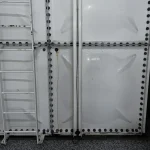
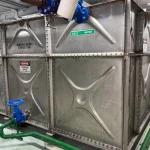
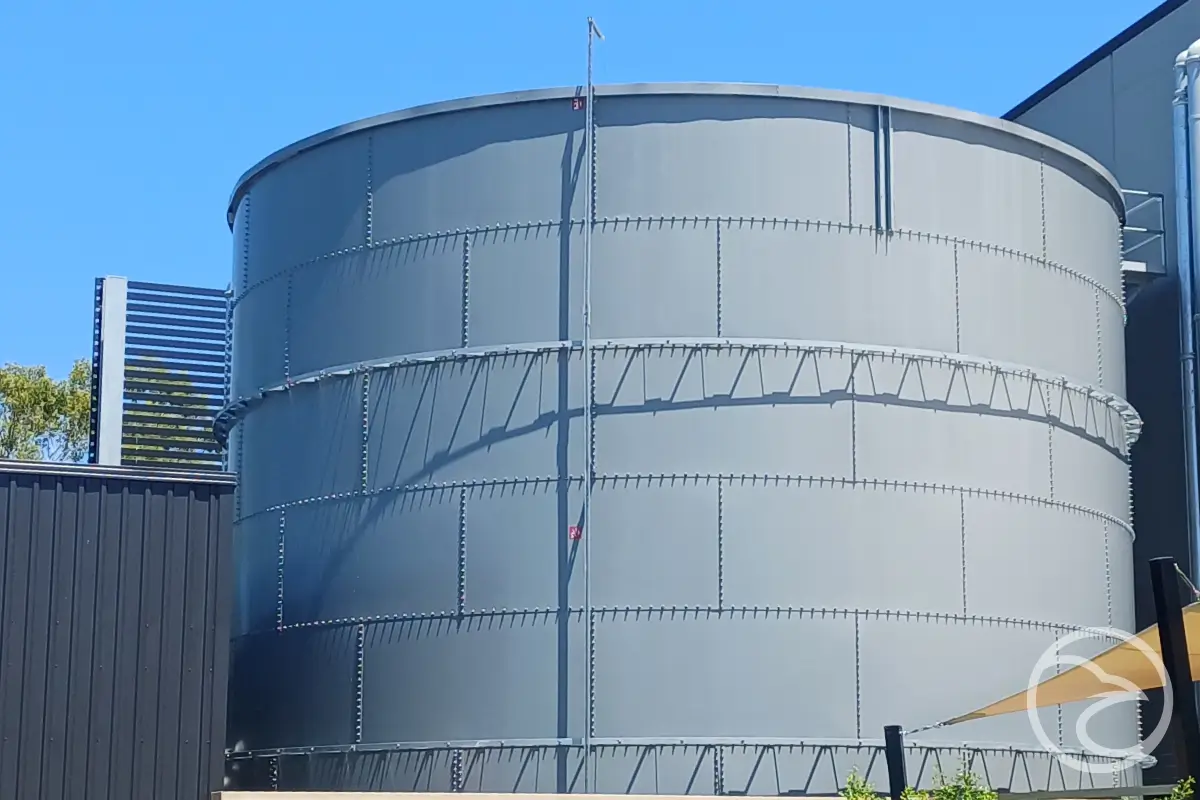
Sectional tanks are assembled from individual stainless steel panels.
The modular design makes them suitable for sites where installing a complete tank would be difficult.
Individual panels can be transported to the site and assembled in the required location. Sectional construction also provides flexibility when designing tanks for restricted or unusual spaces.
Welded Stainless Steel Tanks
Welded tanks use stainless steel sections joined through welding. This construction creates a continuous tank structure and can accommodate different dimensions and capacities.
Welding quality is important because joints must maintain structural integrity and water tightness.
Cylindrical Stainless Steel Tanks
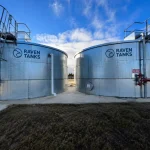
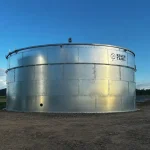
Cylindrical tanks distribute water pressure efficiently around their walls. They are available in different heights and diameters to suit specific storage requirements.
Their shape is common across many water storage applications.
Rectangular Stainless Steel Tanks
Rectangular tanks can make efficient use of available floor space. They can be useful where building dimensions or equipment layouts limit tank placement.
Their structural design must account for pressure across flat wall sections.
Key Stainless Steel Water Tank Specifications
Tank specifications should reflect both the storage requirement and the conditions surrounding the installation. Capacity is one of the first considerations. Tanks can range from relatively small systems to large-volume storage installations.
However, capacity alone does not determine whether a tank is suitable.
Important specifications can include:
- tank capacity;
- overall dimensions;
- stainless steel grade;
- wall thickness;
- tank configuration;
- inlet and outlet sizes;
- overflow capacity;
- drainage arrangement;
- access requirements;
- roof configuration;
- internal supports;
- installation location.
Water characteristics should also form part of the specification process. Chemical composition, chloride levels, temperature, and intended water quality can influence material selection.
Environmental conditions matter as well. Coastal, industrial, or chemically aggressive locations can place additional demands on stainless steel.
A tank should therefore be specified as a complete storage system rather than selected by capacity alone.
What are Stainless Steel Water Tanks Used For?
Stainless steel water tanks can support many different storage requirements.
Common uses include:
- potable water storage;
- drinking water systems;
- commercial water storage;
- industrial process water;
- fire protection water;
- rainwater storage;
- sanitation water;
- emergency water reserves.
Different applications can require different tank specifications. For example, a potable water tank must support water quality and hygiene requirements. An industrial tank may face different chemical or environmental conditions.
Food-related facilities can also have stricter hygiene requirements than general water storage installations.
Therefore, the intended application should be established before selecting the tank design or stainless steel grade.
Learn more about stainless steel water tank applications across potable water, industrial, fire protection, agricultural, and commercial systems.

What Stainless Steel Grades are Used for Water Tanks?
Not all stainless steel performs identically. Different grades contain different alloying elements. These differences affect corrosion resistance, strength, fabrication, and suitability for specific environments.
Grades 304 and 316 are among the most widely recognised stainless steels for water storage.
Grade 304 Stainless Steel
Grade 304 offers good general corrosion resistance and is widely used across many industries. It can be suitable for water storage when operating and environmental conditions are appropriate.
Its widespread availability also makes it a common material for stainless steel fabrication.
Grade 316 Stainless Steel
Grade 316 contains molybdenum in addition to chromium and nickel. This composition provides greater resistance to certain forms of corrosion, particularly in chloride-containing environments.
It can therefore be considered for more demanding conditions. However, choosing between 304 and 316 should not depend on the assumption that one grade is universally better.
Water chemistry, location, temperature, and exposure conditions should guide material selection.
Tank lifespan can depend partly on material selection, so explore the key differences between 304 vs 316 stainless steel water tanks.
Advantages of Stainless Steel Water Tanks
Stainless steel provides several characteristics that make it suitable for water storage.
Corrosion Resistance
Corrosion resistance is one of its primary advantages. The passive chromium-rich surface helps protect stainless steel against many common environmental conditions.
Correct grade selection remains important because corrosion resistance varies between stainless steel types.
Strength
Stainless steel combines mechanical strength with relatively thin structural sections. This makes it suitable for tanks that must withstand substantial water loads.
A properly engineered tank can provide reliable structural performance across a wide range of capacities.
Hygienic Surface
Stainless steel has a smooth, non-porous surface. This characteristic can support cleaning and hygiene requirements, particularly for potable and process water applications.
Appropriate tank design is still necessary to prevent contamination and stagnant areas.
Temperature Resistance
Stainless steel can perform across a broad temperature range. This characteristic can be useful where tanks experience changing environmental or operating temperatures.
Actual temperature limits depend on the complete tank system and its components.
Low Dependence on Protective Coatings
Some steel storage systems require coatings to isolate the base material from water or environmental exposure. Stainless steel obtains much of its corrosion resistance from the material itself.
This can reduce dependence on certain protective coating systems.
Recyclability
Stainless steel is highly recyclable. Its long service potential and recyclability can support projects considering whole-life material use.
Disadvantages of Stainless Steel Water Tanks
Stainless steel also has limitations that should be considered before specifying a tank.
Higher Initial Cost
Stainless steel can have a higher initial material cost than some alternative tank materials. The total cost depends on tank capacity, grade, design, fabrication, and installation requirements.
Initial price should therefore be considered alongside expected service requirements.
Incorrect Grade Selection Can Cause Problems
Stainless steel is corrosion resistant, but it is not corrosion proof. A grade unsuitable for the water chemistry or environment can experience premature deterioration.
This makes accurate material selection particularly important.
Fabrication Requires Appropriate Expertise
Cutting, welding, and finishing stainless steel require suitable procedures. Poor fabrication can affect corrosion resistance and structural performance.
Contamination from inappropriate tools or materials can also damage the stainless steel surface.
Certain Environments can be Aggressive
High chloride concentrations can create challenging conditions for some stainless steel grades. Crevices, deposits, poor drainage, and unsuitable chemical exposure can increase corrosion risks.
Tank design and material selection should reflect these conditions.
Stainless Steel Water Tanks vs Other Tank Materials
Stainless steel is only one option for water storage. Other common materials include polyethylene, concrete, and galvanised steel.
Stainless Steel vs Polyethylene
Polyethylene tanks are lightweight and can provide a cost-effective solution for many smaller storage applications. Stainless steel generally offers greater structural strength and different temperature capabilities.
Tank size, location, water quality, and expected operating conditions should guide the choice.
Stainless Steel vs Concrete
Concrete tanks can provide very large storage capacities and substantial structural mass. However, they involve different construction, waterproofing, inspection, and maintenance considerations.
Stainless steel systems can provide a more modular approach for some installations.
Stainless Steel vs Galvanised Steel
Galvanised steel relies on a zinc coating to protect the underlying steel. Stainless steel uses its alloy composition and passive surface layer for corrosion resistance.
Both materials can perform effectively when correctly specified for their operating conditions. There is no single tank material that suits every project.
How to Choose a Stainless Steel Water Tank
Selecting a tank should begin with the storage requirement rather than a preferred tank size or grade. Several factors should be evaluated together.
Required Storage Capacity
Determine how much water the system must store. Consider normal demand, peak requirements, emergency reserves, and future capacity needs where relevant.
Learn more about water storage tank dimensions and how capacity, site access, and available space can influence tank selection.
Intended Water Use
The required tank specification can change depending on the stored water. Potable, process, fire protection, and sanitation water systems can have different requirements.
Water Chemistry
Water chemistry can influence corrosion performance. Chloride concentration, pH, temperature, and other characteristics should be considered when selecting stainless steel.
Stainless Steel Grade
The grade should suit both the stored water and the external environment. Grade 304 may be suitable for many general applications. More aggressive conditions may justify Grade 316 or another specification.
Installation Environment
Indoor and outdoor tanks face different conditions. Coastal exposure, industrial pollutants, humidity, temperature, and surrounding chemicals can influence material performance.
Available Space
Tank dimensions must suit the installation area. Access for delivery, assembly, inspection, cleaning, and future maintenance should also be considered.
Tank Configuration
Sectional, welded, cylindrical, and rectangular tanks each offer different advantages. The final configuration should match structural, logistical, and operational requirements.
How Long do Stainless Steel Water Tanks Last?
Stainless steel water tanks can provide long service lives when correctly designed, installed, and maintained. However, there is no universal lifespan for every stainless steel tank.
Service life depends on factors including:
- stainless steel grade;
- water chemistry;
- environmental exposure;
- fabrication quality;
- tank design;
- installation quality;
- inspection frequency;
- maintenance practices.
Corrosion does not affect every tank in the same way. Localised conditions can sometimes create problems even when most of the tank remains in good condition.
Regular inspections can identify developing issues before they cause more extensive deterioration.
Water chemistry, material grade, environment, and maintenance all affect how long do atainlees steel water tanks last in different operating conditions.
Do Stainless Steel Water Tanks Require Maintenance?
Stainless steel water tanks are generally considered relatively low-maintenance systems. However, low maintenance does not mean maintenance-free.
Routine inspection should form part of long-term tank management.
Maintenance activities can include checking:
- internal and external surfaces;
- welded joints;
- seals and connections;
- roof and access components;
- sediment accumulation;
- signs of localised corrosion;
- inlet and outlet systems;
- drainage components.
Cleaning requirements depend on water use and applicable hygiene standards. Any signs of corrosion, contamination, leakage, or structural change should be investigated.
Appropriate maintenance helps protect both the tank and the stored water.
Understanding Stainless Steel Water Tanks
Stainless steel water tanks provide a strong and versatile option for many water storage requirements. Their performance depends on more than the material alone. Tank design, stainless steel grade, water chemistry, fabrication, and installation all influence long-term results.
Grade 304 can suit many general water storage environments. Grade 316 may provide additional protection where conditions are more demanding.
The intended application should also guide tank selection. Potable water, process water, fire water, and sanitation systems can have different requirements.
Regular inspection and appropriate maintenance remain important throughout the tank’s service life. Even corrosion-resistant stainless steel can develop problems under unsuitable conditions.
Understanding these factors makes it easier to select a stainless steel water tank suited to its intended environment and application.