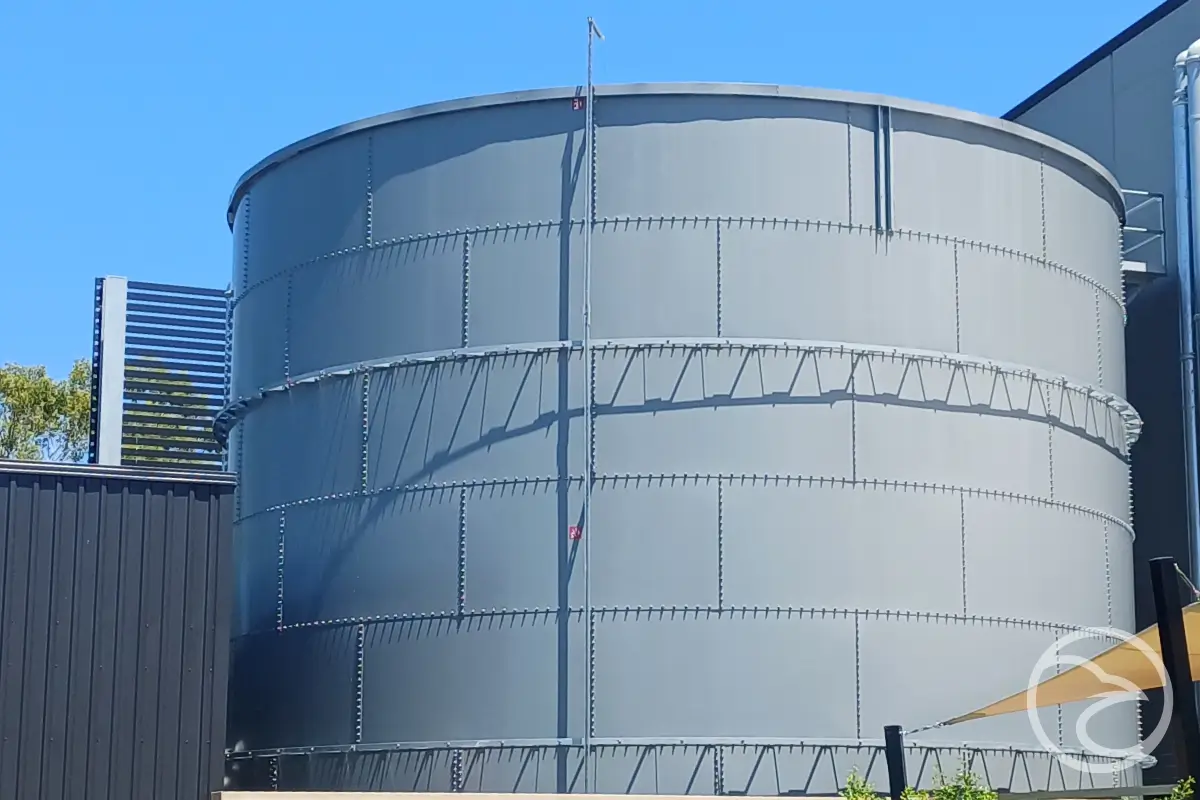

Round water tanks have been used in storage systems for decades, and their widespread adoption is not accidental. The reason circular tanks appear so frequently lies in fundamental engineering principles rather than trends or preference. Circular tank design offers predictable structural behavior, efficient load distribution, and long-term stability under varying storage conditions.
The Engineering Logic Behind Circular Tank Design
At the core of circular tank design is geometry. When water is stored, it applies hydrostatic pressure evenly in all directions. A circular shape naturally accommodates this pressure, allowing forces to be distributed uniformly along the tank walls. This symmetry reduces localized stress points that can occur in angular or irregular shapes.
Because stress is spread more evenly, circular structures tend to respond more predictably to internal loads. This predictable behavior is one of the main reasons round tanks remain common across many water storage applications.
Load Distribution and Structural Stability
Circular tank design supports balanced load distribution. Water exerts continuous outward pressure, and a round wall structure resists this force evenly across its circumference. As a result, no single section of the wall carries a disproportionate share of the load.
This balance contributes to overall structural stability. When external forces such as wind or minor ground movement are introduced, the round shape helps the structure absorb and redistribute stress rather than concentrating it in specific areas. Over time, this can influence how consistently a tank performs.
Material Efficiency and Shape Performance
The shape of a tank influences how materials behave under pressure. In circular tank design, materials work together along a continuous curve, reducing the likelihood of stress concentration at corners or joints. This can support more uniform material performance over extended periods.
The geometry also allows designers to achieve strength without excessive material thickness in certain areas. While material choice still plays a significant role, the round shape helps maximize structural efficiency within the design.
Response to Internal and External Forces
Water storage tanks are subject to more than internal pressure alone. Temperature changes, settlement, and environmental forces all interact with the structure. Circular tank design responds well to these influences because movement tends to be distributed rather than focused.
For example, minor expansion or contraction caused by temperature shifts can be accommodated more evenly in a circular form. This helps reduce uneven deformation and supports long-term structural consistency.
Space Utilization and Functional Design
From a functional perspective, circular tanks often integrate well into a variety of site layouts. Their shape allows for efficient use of available space without requiring complex internal support structures. This simplicity supports clear internal flow patterns and consistent water containment.
In many systems, the round form also simplifies hydraulic behavior, as water movement remains more uniform within the tank. While this varies by application, shape plays a role in how water behaves inside storage systems.
Historical Use and Continued Adoption
Circular reservoirs have been part of water storage systems for centuries. Early engineers recognized that curved structures offered stability and resilience under load. This historical understanding continues to influence modern water containment design.
Despite advances in materials and construction methods, the principles behind circular tank design remain relevant. The form continues to align well with the physical behavior of stored water, which explains its ongoing presence in storage infrastructure.

Why Shape Still Matters in Water Storage
The continued use of round water tanks highlights the importance of shape in structural design. Circular tank design aligns naturally with the forces created by stored water, supporting stability, balance, and predictable performance.
Rather than being driven by preference, the widespread use of round tanks reflects a practical response to engineering demands that remain consistent over time.