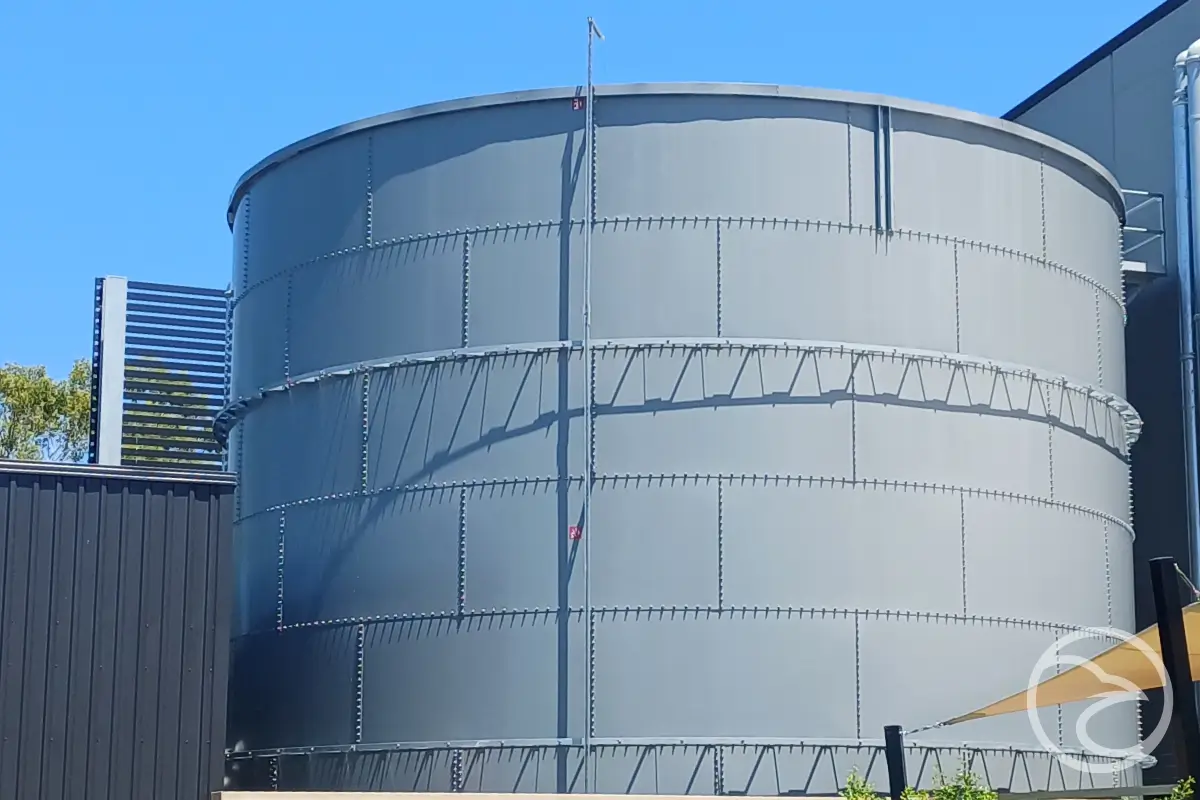
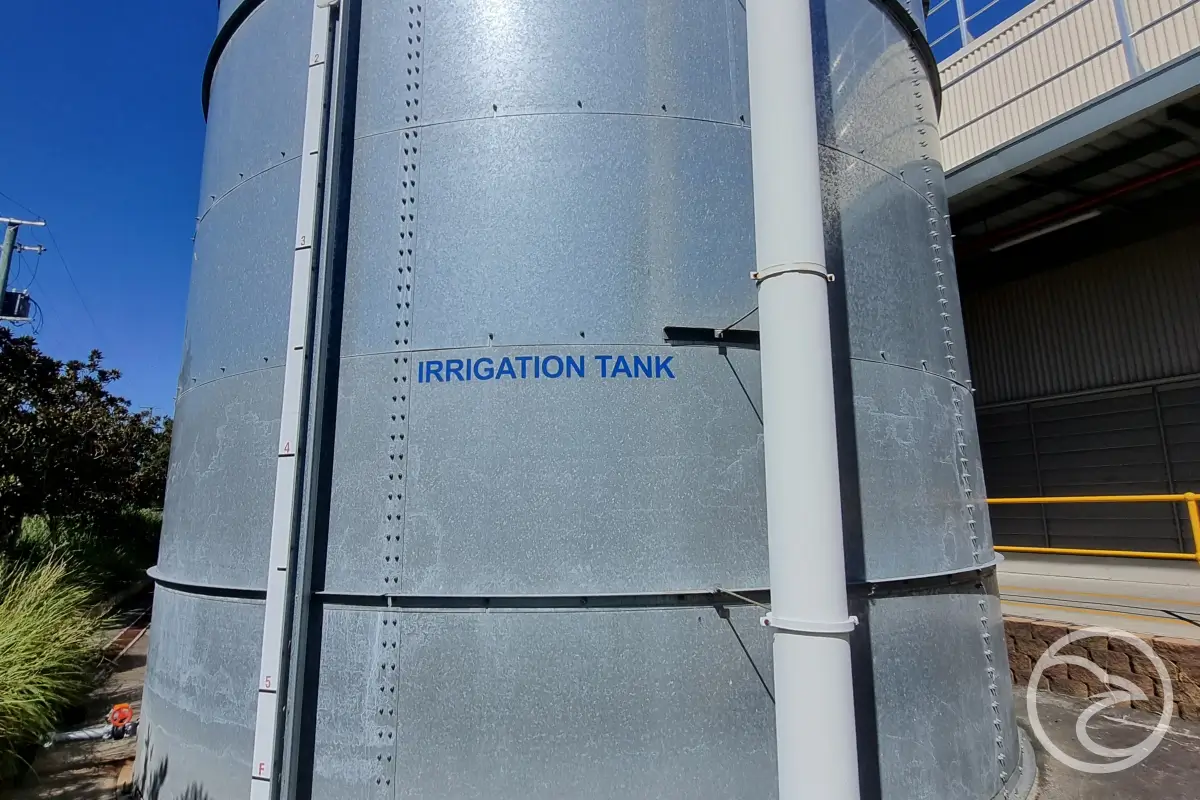
AS 1851 fire tank requirements help facilities maintain reliable fire water storage as part of their fire protection systems. AS 1851:2012 covers routine servicing of fire protection systems and equipment in Australia.
For fire tanks, ongoing servicing helps identify conditions that could affect water availability or system reliability. These include corrosion, leaks, structural deterioration, damaged components, and changes in tank condition.
However, AS 1851 should not be treated as a standalone design standard for every fire water tank requirement. Other Australian Standards can apply depending on the system, building, tank, and jurisdiction.
This guide explains the main requirements facility managers should understand when managing fire water storage tanks.
What is AS 1851 and how does it Apply to Fire Tanks?
AS 1851:2012 is titled Routine service of fire protection systems and equipment. It provides a framework for maintaining fire protection systems throughout their operational life. The standard focuses on routine service rather than the original design of a fire protection system.
For facilities with dedicated fire water storage, this distinction is important. A tank may have been correctly designed and installed. However, its condition can change over many years of operation.
Corrosion can develop on steel surfaces. Liners can deteriorate. Connections may leak. Structural components can become damaged. Water levels can also fall below the capacity required by the connected fire protection system.
Routine servicing helps identify these conditions before they become larger operational problems. Australian Standards are generally voluntary documents by themselves. However, governments can reference standards within legislation, making compliance mandatory in particular circumstances.
Facility owners should therefore consider applicable legislation, building requirements, system specifications, and local authority requirements.
Key AS 1851 Fire Tank Requirements
Fire tanks should remain capable of supporting the fire protection systems they serve. This means more than checking whether a tank currently contains water.
The tank, stored water, accessible components, and surrounding conditions should be considered during ongoing servicing.
Several areas deserve particular attention.
Fire Water Storage Capacity
Available fire water storage is fundamental to system performance. The required capacity depends on the fire protection system and applicable design requirements. A facility should not assume that any available volume is sufficient.
Changes to a building or fire protection system may also affect required storage. The tank should therefore continue supporting the water supply requirements established for that specific installation.
Loss of usable capacity can occur without complete tank failure. Leaks can gradually reduce available water. Sediment can affect usable internal space. Operational changes can also influence storage conditions.
Where capacity concerns are identified, they should be investigated against the system’s applicable requirements.
Water Level and Availability
Maintaining the required water level helps keep the stored supply available when the fire system needs it. Water level should therefore form part of ongoing tank management.
Unexpected reductions can indicate leakage, operational problems, or issues elsewhere in the system. Repeated topping up without investigating the cause can hide a developing problem.
Facilities should investigate unexplained water loss and record relevant findings. Level indicators should also provide dependable information about the tank’s stored water.
An inaccurate indicator can create a false impression that adequate water remains available.
Tank Condition and Structural Integrity
Fire water tanks remain in service for long periods and experience ongoing environmental exposure. Their physical condition can therefore change considerably over time.
Common areas requiring attention include:
- Tank walls and panels.
- Roof structures.
- Accessible floor and base areas.
- Structural supports.
- Bolted connections.
- Panel joints.
- External fixtures.
- Access points.
Visible deformation, movement, cracking, or deterioration should not simply be treated as cosmetic damage. These conditions can indicate developing integrity problems.
Changes should be documented and compared with previous inspection findings where records are available.
Corrosion and Material Deterioration
Corrosion is particularly important for steel fire water tanks. It can develop externally or within submerged areas. The rate and location of corrosion depend on the tank material, environment, water conditions, and protective systems.
Inspectors may identify surface corrosion, coating deterioration, rust staining, pitting, or other visible changes. Galvanised tanks also require attention to the condition of their protective coating.
Damage to galvanised surfaces can expose the underlying steel and increase the risk of further deterioration.
Early identification provides more options for maintenance before significant material loss occurs.
Connections, Valves and Tank Components
The tank operates as part of a larger fire protection system. Its accessible connections and components therefore matter alongside the tank shell itself.
Depending on the installation, relevant areas can include:
- Inlets and outlets.
- Overflow arrangements.
- Flanges and fittings.
- Penetrations.
- Level indicators.
- Accessible valves.
- Connected pipework.
- Tank access points.
Inspection should look for leakage, corrosion, physical damage, deterioration, or unusual movement. Problems around penetrations and fittings can also become sources of ongoing water loss.
The exact components requiring attention depend on the individual installation.
Access and Safety
Routine servicing requires suitable access to relevant tank areas. Poor access can make it difficult to assess tank condition effectively. Access arrangements may include ladders, platforms, roof access, hatches, or other installed systems.
Their condition should support safe inspection and maintenance activities. Internal tank access presents additional hazards and should never be treated as routine entry.
Where appropriate, alternative inspection methods can reduce the need for personnel to enter difficult areas.
AS 1851 Fire Tank Inspection Requirements
A fire water tank inspection helps establish whether conditions have developed that could affect ongoing tank performance. The inspection scope should reflect the tank type, system configuration, accessibility, and applicable servicing requirements.
The objective is not simply to find obvious leaks. A useful assessment considers the tank as a complete water storage asset. Typical areas include the external structure, accessible internal areas, water level, corrosion, fittings, and visible deterioration.
Inspection findings should also provide enough information for appropriate follow-up decisions. A minor coating defect may require monitoring or maintenance. Significant corrosion may require a more detailed assessment.
Water loss can require investigation before repairs are planned. Structural movement may require specialist review. This is why documented findings are valuable. They provide evidence for maintenance decisions instead of relying on visual assumptions.
For facilities requiring a detailed condition assessment, professional fire tank inspections can identify defects and support future maintenance planning.
How Often Should Fire Tanks be Inspected?
There is no useful universal answer such as “inspect every fire tank once each year.” The appropriate servicing schedule depends on the applicable standard requirements and the fire protection system.
AS 1851 establishes routine servicing requirements for fire protection systems and equipment. However, facility managers should use the requirements applying to their specific installation. Additional assessment may also be appropriate when conditions change.
For example, an inspection may be advisable after:
- Visible leakage or unexplained water loss.
- Significant storm or environmental damage.
- Evidence of corrosion.
- Changes in tank shape or alignment.
- Damage to the roof or panels.
- Problems with tank fittings or connections.
- Previous inspection findings requiring follow-up.
- Major maintenance or repair work.
Tank age should also be considered alongside condition history. An older tank with recurring defects may require closer attention than a newer tank in stable condition.
Inspection records can help determine whether deterioration is progressing between service intervals.
AS 1851 vs AS 2304: what is the Difference?
AS 1851 and AS 2304 are associated with different stages of fire water tank management. This distinction is important when researching fire water storage tank requirements. AS 1851 primarily addresses routine servicing of fire protection systems and equipment.
It helps guide the ongoing service activities needed after systems enter operation. Design and installation requirements are addressed through other applicable standards and system requirements.
The same principle can be seen with fire hydrant systems. For example, AS 2419.1:2021 specifically addresses design, installation, commissioning, and testing of fire hydrant installations.
Therefore, compliance should not be reduced to checking one standard. The relevant requirements depend on how the tank is used and which fire protection systems it supports.
Facility managers should confirm the standards and regulatory requirements applicable to their particular installation.
Common Fire Tank Problems that can Affect Compliance
A fire tank does not need to suffer a major failure before attention is required. Small defects can progressively affect tank condition and water storage reliability.
Common concerns include:
- Internal or external corrosion.
- Breakdown of galvanised coatings.
- Persistent leaks or unexplained water loss.
- Insufficient stored water.
- Structural movement or deformation.
- Damaged tank panels.
- Roof deterioration.
- Damaged or deteriorated liners.
- Corroded fittings and connections.
- Sediment or contamination.
- Damaged access components.
- Incomplete servicing records.
The significance of each condition depends on its location, extent, and impact on the system. For example, minor surface corrosion differs significantly from advanced corrosion around a structural connection.
Likewise, a small liner defect may become more important when associated with continuing water loss. The purpose of assessment is therefore to understand both the defect and its potential consequence.
Why Fire Tank Corrosion Requires Attention
Corrosion is one of the most important long-term concerns for steel fire tanks. External corrosion may develop where surfaces experience prolonged moisture or environmental exposure.
Internal corrosion can be harder to identify because affected areas may remain submerged. Protective coatings and galvanised finishes help protect steel surfaces. However, these systems can deteriorate through age, damage, water conditions, or environmental exposure.
Once deterioration starts, delaying corrective work can allow the affected area to expand. Routine condition assessment helps identify corrosion before extensive material loss develops.
The findings can then guide appropriate monitoring, repair, coating work, or further investigation.
Fire Water Tank Liners and Water Retention
Many fire water storage tanks use liners to retain stored water. The liner therefore plays an important role in maintaining usable storage capacity. Liners can develop problems through ageing, physical damage, movement, or deterioration.
Visible concerns can include tears, separation, distortion, or damage around penetrations. A damaged liner does not always produce immediate major water loss. Smaller defects can develop gradually and become more significant over time.
Evidence of unexplained water loss should therefore be investigated rather than treated only by topping up the tank. The liner condition should also be considered alongside the supporting tank structure.
Structural movement can place additional stress on liner materials and connections.
Fire Tank Records and Documentation
Good records make routine fire tank management much easier. Inspection findings provide a condition history that can be compared over time.
Documentation can include:
- Inspection dates.
- Areas assessed.
- Identified defects.
- Photographic evidence.
- Corrosion observations.
- Water level concerns.
- Leakage findings.
- Recommended corrective actions.
- Completed maintenance or repairs.
- Outstanding items requiring follow-up.
Consistent records help facility managers distinguish between new defects and previously documented conditions. They can also show whether an existing problem is stable or becoming progressively worse.
This information supports better maintenance planning and budgeting. Records are particularly useful when responsibility changes between facility managers, contractors, or building owners.
A documented history provides continuity that visual inspection alone cannot provide.
What Happens when a Fire Tank does not Meet Requirements?
The appropriate response depends on the problem identified. Not every defect means that the entire tank requires replacement. Some issues can be addressed through maintenance or targeted repair.
Others may require engineering assessment, refurbishment, liner work, or component replacement. The first priority is understanding the condition and its effect on the fire water supply.
Issues affecting available water or structural integrity generally require greater attention than minor cosmetic deterioration. The findings should then be prioritised according to their significance.
Urgent defects can be addressed first. Lower-priority deterioration can be incorporated into planned maintenance.
This approach helps facilities avoid reactive decisions after problems become more severe. It also creates a clearer path from inspection findings to corrective work.
How to Keep a Fire Water Tank Serviceable
Long-term compliance requires ongoing management rather than a single inspection. Facility managers should maintain a consistent approach to tank condition and servicing.
A practical programme should include:
- Following applicable routine servicing requirements.
- Maintaining the required fire water supply.
- Investigating unexpected changes in water level.
- Monitoring corrosion and coating deterioration.
- Recording structural defects or movement.
- Checking accessible connections and fittings.
- Maintaining safe access for servicing.
- Keeping inspection and maintenance records.
- Completing corrective work when defects are identified.
- Reviewing recurring problems instead of repeatedly treating symptoms.
Maintenance decisions should be based on actual tank condition and applicable system requirements. Where uncertainty exists, the relevant Australian Standards and local regulatory requirements should be confirmed.
Australian Standards are also reviewed over time, so facilities should confirm which editions apply to their circumstances.
Understanding Fire Tank Requirements as Part of the Complete System
A fire tank should never be considered separately from the fire protection system it supplies. Its purpose is to provide a dependable source of water when that system requires it. That makes stored volume, physical condition, connections, and maintenance equally important.
Requirements can also differ between hydrant, sprinkler, and other fire protection arrangements. AS 2419.1:2021, for example, covers design, installation, commissioning, and testing requirements for fire hydrant installations.
The National Construction Code and relevant state or territory requirements may also affect individual installations. Facility managers should therefore avoid applying generic fire tank requirements without considering the actual system.
A compliant approach starts with identifying which requirements apply to the specific building and fire protection arrangement.