Water tank roofs play an essential role in protecting stored water and maintaining the reliability of storage systems. They help prevent external contamination, limit environmental exposure, and protect internal tank components.
However, tank roofs face continuous exposure to weather, temperature changes, moisture, and operational stress. Over time, these conditions can contribute to corrosion, material deterioration, and structural damage.
Some problems develop gradually, making them difficult to identify during routine maintenance. Others appear suddenly following extreme weather, mechanical impacts, or unexpected loading. Early detection helps facility managers address potential risks before they affect water quality or storage reliability.
Understanding the causes of roof deterioration also supports better inspection planning and preventive maintenance. This guide explores common causes of water tank roof damage, warning signs, operational risks, and practical prevention strategies.
Understanding the Role of Water Tank Roofs
Water tank roofs serve several important functions beyond covering the stored water. Their primary purpose is to protect tank contents from environmental contamination and unwanted external materials. A properly designed roof helps prevent rainwater, debris, insects, and other contaminants from entering the storage system.
Roof structures may also support access openings, ventilation components, and inspection equipment. Different storage applications require different roof designs and materials.
Common tank roof materials include:
-
Galvanised steel: Provides structural strength and corrosion protection through a zinc coating.
-
Stainless steel: Offers corrosion resistance in suitable operating environments.
-
Aluminium: Combines relatively low weight with good corrosion resistance.
-
Glass Reinforced Plastic (GRP): Provides lightweight construction and resistance to many corrosive environments.
-
Coated steel: Uses protective finishes to limit exposure to moisture and corrosive substances.
Material selection depends on tank size, stored contents, environmental conditions, and structural requirements. Some roofs use internal support structures, while others rely on different engineered load-bearing arrangements.
Regardless of design, roof components must withstand expected environmental and operational loads. Connections, seals, fasteners, and supporting members also contribute to overall performance.
Deterioration in these areas may affect roof integrity even when the main surface appears undamaged. Understanding these structural relationships helps maintenance teams identify vulnerable areas during inspections.
What Causes Water Tank Roof Damage?
Water tank roof deterioration can result from environmental exposure, material ageing, structural stress, and inadequate maintenance. The severity depends on roof construction, installation quality, operating conditions, and surrounding environmental factors.
Several causes may also act together, accelerating deterioration.
Corrosion and Material Deterioration
Corrosion is a common concern for metal water tank roofs. It develops when susceptible metals react with moisture, oxygen, and other environmental substances.
Protective coatings and galvanised finishes help reduce corrosion risks. However, damaged coatings may expose underlying metal to corrosive conditions.
Corrosion frequently develops around:
-
Fasteners and roof connections.
-
Areas with damaged protective coatings.
-
Roof penetrations and access openings.
-
Locations where moisture accumulates.
-
Contact points between incompatible metals.
-
Areas exposed to industrial pollutants.
Surface corrosion may initially appear as small rust spots or discolouration. Without appropriate attention, corrosion can progress and reduce material thickness.
Advanced deterioration may weaken roof sheets, fasteners, or supporting components. GRP and other non-metallic materials experience different deterioration mechanisms.
These may include resin degradation, cracking, and laminate damage rather than conventional metal corrosion. Regular condition assessments help identify material-specific problems.
Weather Exposure and Environmental Conditions
Water tank roofs are exposed to changing weather throughout their service life. Sunlight, rainfall, wind, and temperature fluctuations can gradually affect roof materials. Strong winds may place additional loads on roof sheets, connections, and supporting structures.
Heavy rainfall can expose drainage weaknesses and deteriorated seals. In coastal environments, airborne salt may accelerate corrosion of susceptible metal components. Industrial environments may introduce additional airborne contaminants.
Common environmental risks include:
-
Prolonged UV exposure.
-
Repeated wetting and drying.
-
High humidity.
-
Strong wind loading.
-
Airborne salt deposits.
-
Extreme temperature changes.
-
Storm-related debris impacts.
Different materials respond differently to these conditions. For example, UV exposure may affect unprotected polymer surfaces, while moisture can accelerate corrosion of exposed steel.
Roof design and protective finishes should reflect local environmental conditions. Regular inspections become particularly important following severe weather events.
Structural Stress and Excessive Loading
Water tank roofs are engineered to withstand specific loads. These may include wind forces, maintenance access loads, and other conditions defined during design.
Unexpected loading can increase stress on structural components.
Potential causes include:
-
Heavy equipment placed on roof surfaces.
-
Unsupported modifications.
-
Excessive loads from accumulated debris.
-
Unexpected pressure or vacuum conditions.
-
Damaged structural supports.
-
Movement in connected components.
Loads beyond design limits may cause deformation, cracking, or connection failures. Roof support members can also deteriorate through corrosion or repeated stress. Structural movement may transfer additional forces to surrounding components.
Not every roof is designed for personnel access. Maintenance teams should confirm access limitations before conducting inspections.
Poor Drainage and Standing Water
Effective drainage helps prevent unnecessary moisture accumulation on tank roofs. Poor drainage may allow water to remain around joints, fasteners, and low-lying areas.
Standing water can accelerate corrosion when protective surfaces are compromised. It may also increase loads on roof structures.
Common contributing factors include:
-
Blocked drainage paths.
-
Accumulated leaves or debris.
-
Incorrect roof slopes.
-
Deformed roof surfaces.
-
Damaged drainage components.
-
Poorly maintained roof openings.
Persistent water accumulation may indicate a drainage or structural problem. For some roof designs, ponding can increase deformation and encourage further water accumulation.
This interaction may create progressively worsening conditions. Drainage performance should therefore be considered during routine roof assessments.
Ageing and Inadequate Maintenance
Water tank roof components gradually experience wear during normal operation. Protective coatings, seals, fasteners, and structural materials may deteriorate at different rates. The speed of ageing depends on environmental exposure and maintenance quality.
Minor defects can remain unnoticed when inspection schedules are inconsistent. Examples include small coating failures, deteriorated seals, or early corrosion around fasteners. Over time, these issues may become more extensive.
Inadequate maintenance can also allow debris accumulation and persistent moisture exposure. However, roof age alone does not determine its condition.
A well-maintained older roof may remain serviceable, while a newer roof may deteriorate under unsuitable conditions. Regular assessments provide more reliable information than age alone.
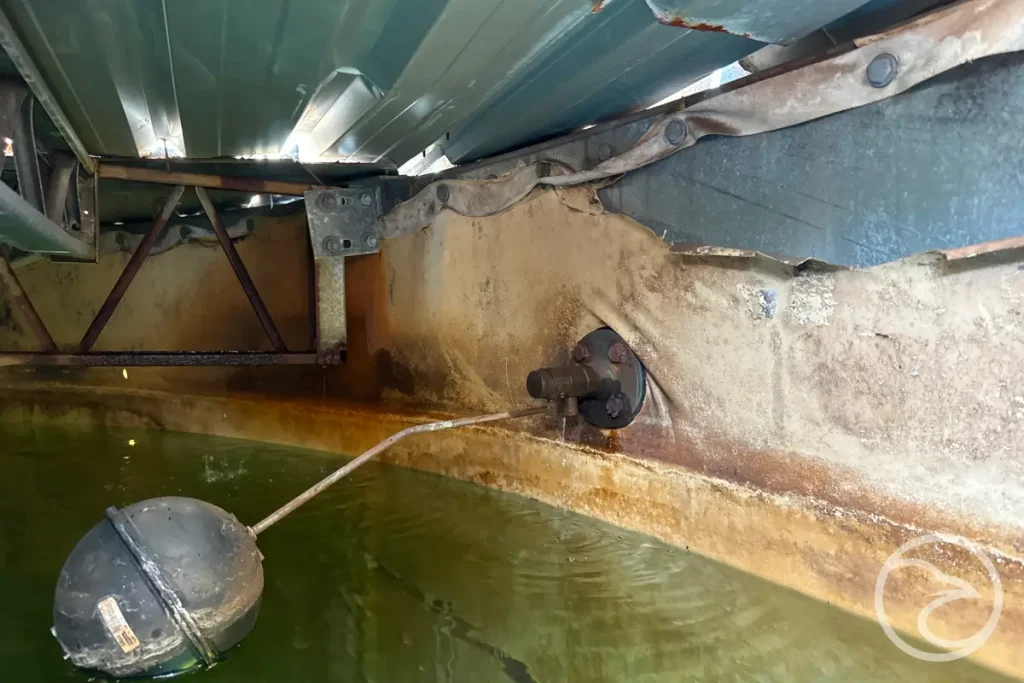
Common Warning Signs of Tank Roof Deterioration
Water tank roof damage often produces visible or operational warning signs. Some symptoms indicate surface deterioration, while others suggest possible structural concerns.
Recognising these changes supports timely investigation.
Visible Rust and Corrosion
Rust is one of the most recognisable signs of deterioration on susceptible steel roofs. Early corrosion may appear as small reddish-brown patches.
More advanced corrosion may involve flaking, pitting, or visible material loss.
Areas requiring attention include:
-
Roof sheet edges.
-
Fastener locations.
-
Structural connections.
-
Areas surrounding access hatches.
-
Damaged coating surfaces.
-
Roof support components.
Rust staining does not always indicate extensive structural deterioration. However, corrosion affecting load-bearing components can become a serious concern.
Maintenance teams should document changes and monitor affected areas. Not all corrosion develops visibly, making the insights in warning signs of MIC corrosion in storage systems particularly valuable.
Roof Leaks and Water Infiltration
A damaged roof may allow unwanted water to enter the tank. Leaks can develop around deteriorated seals, roof penetrations, joints, or damaged roof materials.
Possible warning signs include:
-
Water marks beneath roof connections.
-
Moisture around access openings.
-
Visible gaps in roof joints.
-
Dripping during rainfall.
-
Damaged flashing or seals.
-
Evidence of external water entering the tank.
Not every moisture-related symptom confirms a roof leak. Condensation, internal humidity, and nearby components may produce similar observations.
The source should be identified before determining the cause. Uncontrolled water entry can introduce contamination risks, particularly in potable water storage systems.
Sagging, Deformation and Structural Movement
Changes in roof shape may indicate excessive loading or deterioration of supporting components. Roof deformation can develop gradually or following unusual events.
Warning signs include:
-
Visible sagging.
-
Uneven roof surfaces.
-
Misaligned connections.
-
Movement around structural supports.
-
Distortion near access openings.
-
Changes in roof geometry.
Some movement may be expected under normal design conditions. However, increasing or unusual deformation requires further attention.
Structural changes can affect drainage, connection performance, and overall roof stability. Significant deformation should be evaluated by qualified personnel.
Damaged Seals, Joints and Roof Connections
Seals and connections help maintain roof integrity. They may deteriorate through ageing, temperature changes, mechanical movement, or environmental exposure.
Damaged connections can create openings that allow moisture or contaminants to enter.
Common symptoms include:
-
Cracked or deteriorated sealants.
-
Loose or damaged fasteners.
-
Separation around roof joints.
-
Gaps near penetrations.
-
Corrosion around connection points.
-
Unusual movement between components.
These areas often experience different stresses from the main roof surface. Routine inspections should therefore include accessible connections and penetrations.
Surface Cracks and Material Weakening
Cracking can affect certain roof materials, including GRP and protective coating systems. Its significance depends on material type, location, and depth.
Surface cracks may result from weathering, repeated movement, or mechanical stress. More serious damage may involve structural components.
Potential indicators include:
-
Fine surface cracking.
-
Localised fractures.
-
Coating separation.
-
Exposed reinforcing fibres.
-
Blistering or delamination.
-
Cracks near structural connections.
Surface appearance alone may not reveal the full extent of deterioration. Suspected structural damage requires appropriate assessment.
How Roof Damage Affects Water Tank Performance
Roof deterioration can affect water storage systems in several ways. The consequences depend on the stored substance, tank application, and severity of damage.
Increased Water Contamination Risks
A compromised roof may allow external materials to enter the tank. Potential contaminants include dust, debris, insects, rainwater, and airborne pollutants.
Damaged access openings or seals can increase these risks. For potable water systems, maintaining appropriate protection against contamination is particularly important.
Roof integrity forms part of the broader water quality management process.
Reduced Structural Reliability
Roof structures depend on correctly functioning materials, supports, and connections. Corrosion or mechanical damage may reduce the capacity of affected components.
Deterioration can also change how loads are distributed. In severe cases, structural instability may create safety risks.
Early investigation helps determine whether observed changes affect continued operation.
Operational Disruption
Unexpected roof problems may require additional inspections or temporary operational restrictions. Maintenance activities can also affect tank availability.
Industrial facilities may experience disruptions when storage capacity becomes unavailable. Planning preventive maintenance helps reduce unexpected interruptions.
Risks for Fire Protection Water Tanks
Fire protection tanks provide water for essential firefighting systems. Roof deterioration may introduce contamination or create structural concerns.
Debris entering the tank can also create problems for connected equipment under certain conditions. Maintenance activities must account for required system readiness.
Any impairment affecting fire protection water availability should follow applicable procedures and regulatory requirements.
How to Identify Water Tank Roof Problems Early
Early detection requires regular observations and consistent maintenance records. Some roof problems are visible from safe inspection locations.
Others require specialist assessment or appropriate access arrangements. A systematic approach helps identify changes before deterioration becomes extensive.
Routine Visual Inspections
Visual inspections can reveal corrosion, damaged seals, deformation, and surface deterioration. Accessible roof components should be examined for unusual changes.
Inspection observations may include:
-
Corrosion around connections.
-
Damaged protective coatings.
-
Cracked seals.
-
Accumulated debris.
-
Standing water.
-
Visible structural movement.
-
Damaged access openings.
Inspection methods should reflect roof design and site safety requirements. Personnel should not walk on roof surfaces unless access is specifically permitted and appropriately controlled.
Understanding how inspections protect structural integrity is essential, with practical guidance available in our tank inspection guide.
Monitoring Leaks and Moisture
Moisture patterns can provide early indications of roof problems. Maintenance teams should investigate recurring dampness or evidence of unwanted water entry.
Observations should consider weather conditions and normal tank operation. Persistent moisture around specific locations may indicate deteriorated seals or connections.
However, condensation should also be considered before identifying a leak.
Checking Roof Supports and Connections
Roof supports and structural connections are important components of the overall system. Deterioration may develop in locations that are difficult to observe externally.
Visible changes around supports should be documented. Unusual deformation, corrosion, or connection movement may require specialist evaluation.
Internal access should only occur under appropriate safety procedures.
Recording Changes Over Time
Accurate records help identify whether roof deterioration is stable or progressing. Photographs and inspection notes provide useful reference points.
Records should include:
-
Inspection dates.
-
Locations of observed damage.
-
Photographs.
-
Changes since previous inspections.
-
Relevant weather events.
-
Recommended follow-up actions.
Consistent documentation supports long-term maintenance planning.
Preventive Maintenance Practices for Water Tank Roofs
Preventive maintenance helps protect roof materials and identify developing problems. An effective maintenance programme should reflect tank design, operating conditions, and environmental exposure.
Several practical measures can support roof longevity.
Establish Regular Inspection Schedules
Inspection frequency should follow manufacturer guidance, applicable standards, and operational requirements. Tanks in demanding environments may require additional attention.
Regular inspections help identify early corrosion, leakage, and structural changes. Schedules should also account for previous defects and maintenance history.
Monitor Corrosion and Protective Coatings
Protective coatings help shield susceptible metal surfaces from environmental exposure. Damaged coatings may allow corrosion to develop.
Maintenance teams should monitor visible coating deterioration and affected areas. Any coating maintenance should use suitable materials and approved procedures.
Compatibility is particularly important for potable water applications.
Keep Drainage Paths Clear
Blocked drainage can contribute to standing water and increased roof loading. Accessible drainage components should be monitored for debris accumulation.
Changes in drainage performance may indicate deformation or obstruction. Cleaning activities must follow safe access procedures.
Control Unnecessary Roof Loading
Roof surfaces should not support loads beyond their design capacity. Maintenance equipment, stored materials, and unauthorised modifications can introduce additional stress.
Personnel access should be restricted according to the roof’s engineering specifications. Changes to roof-mounted equipment should receive appropriate technical review.
Maintain Seals and Connections
Roof seals and connections should be included in routine maintenance planning. Visible deterioration may indicate reduced sealing performance.
Loose components, damaged sealants, and connection movement should be documented. Appropriate maintenance depends on the materials and roof design.
Review Roof Condition after Severe Weather
Storms and extreme weather may introduce unusual loads or cause mechanical damage.
Additional inspections may be appropriate following:
-
Severe wind events.
-
Hailstorms.
-
Falling debris.
-
Unusual rainfall.
-
Significant temperature changes.
-
Nearby structural damage.
These inspections can identify problems that develop between scheduled maintenance activities.
Maintain Accurate Inspection Records
Inspection records help facility managers identify recurring issues and deterioration trends. They also provide useful information for future condition assessments.
Documentation should include completed maintenance activities and outstanding concerns. Consistent records support informed decisions about long-term roof management.
Early detection helps prevent serious deterioration, as explained in our article, signs your water tank needs maintenance.
When does Tank Roof Damage Require Professional Assessment?
Some roof problems cannot be evaluated reliably through routine visual inspections. Professional assessment may be necessary when deterioration affects structural components or creates significant operational concerns.
Important warning signs include:
-
Extensive corrosion or material loss.
-
Significant roof deformation.
-
Persistent water infiltration.
-
Damaged structural supports.
-
Progressive cracking.
-
Suspected connection failure.
-
Repeated deterioration in the same area.
A qualified specialist can assess the condition of affected materials and supporting structures. The assessment may consider roof design, load requirements, material deterioration, and operational risks.
Depending on the findings, further maintenance or structural intervention may be necessary. Where deterioration is extensive, professional evaluation can help determine whether tank roof replacement is appropriate.
The decision should reflect structural condition, safety requirements, and long-term operational needs. Roof access and assessment activities must follow relevant safety procedures.
Extensive corrosion or structural deterioration may require professional tank roof replacement services to restore safety and reliability.
Conclusion
Water tank roofs are essential for protecting stored water and maintaining reliable storage operations. However, corrosion, environmental exposure, structural stress, and inadequate maintenance can gradually affect their condition.
Recognising early warning signs helps facility managers identify potential problems before deterioration becomes more extensive. Regular inspections, appropriate drainage, controlled loading, and consistent maintenance records support long-term roof performance.
Persistent leaks, significant deformation, and advanced corrosion require particular attention. A proactive approach to roof maintenance helps protect water quality, support structural reliability, and reduce unexpected operational disruptions.