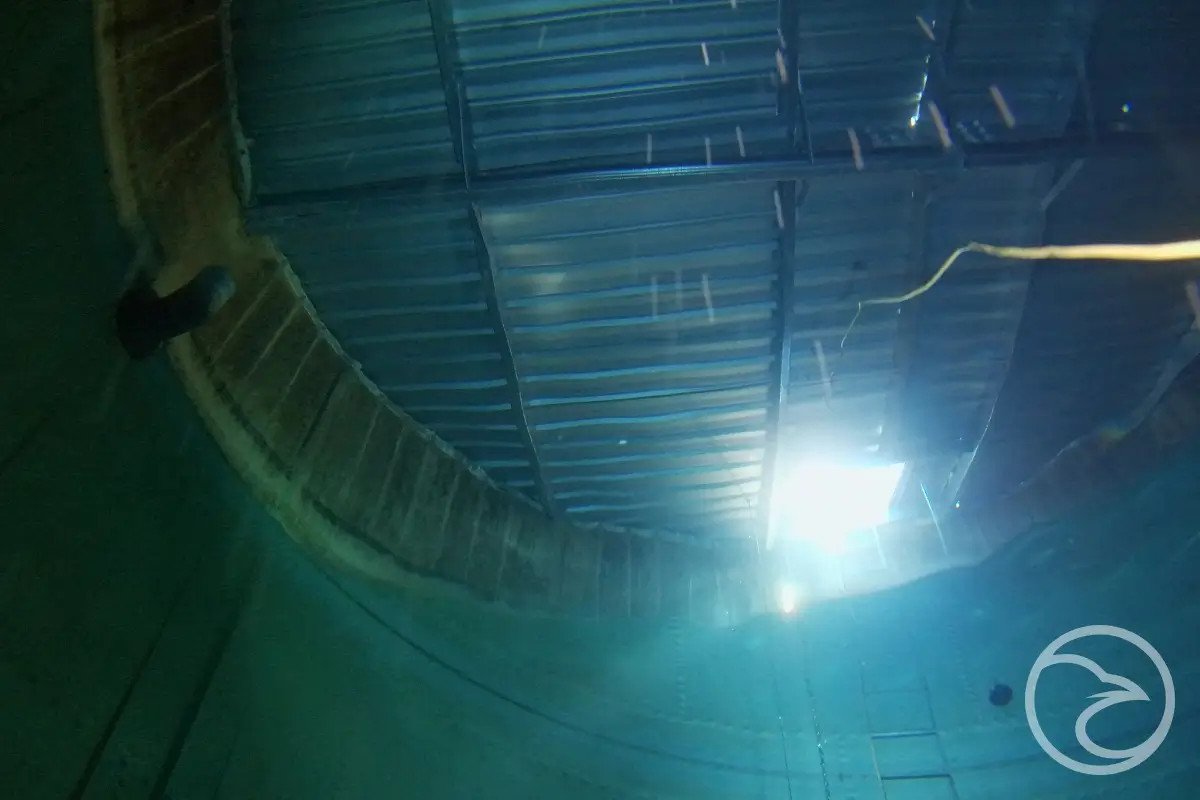
Underwater tank inspection is essential for maintaining structural integrity and water quality. Choosing the right inspection method directly affects safety, cost, and inspection accuracy.
Two main approaches are used today: ROV inspection and diver inspection. Each method has specific strengths, but the differences between them are significant.
If you are new to robotic inspections, start with how does rov inspection work to understand the process in detail.
What is ROV Inspection?
ROV stands for remotely operated vehicle. It is a robotic system equipped with cameras, lights, and sometimes sensors. The system is controlled from outside the tank. It captures video and data without requiring human entry.
Typical ROV inspection features include:
- real-time video monitoring
- high-resolution recording
- operation in low visibility
- no need to drain the tank
Today, many facilities rely on ROV inspection as a safer alternative to traditional methods.
What is Diver Inspection?
Diver inspection involves trained professionals entering the tank physically. They perform visual assessments and sometimes manual checks. This method has been used for many years and is still applied in certain industries.
However, diver inspections come with limitations:
- safety risks in confined spaces
- dependency on human visibility
- higher operational complexity
- potential need for tank shutdown
Because of these factors, companies are increasingly evaluating alternatives.
Key Differences Between ROV and Diver Inspection
Understanding the core differences helps determine which method is more suitable.
1. Safety
Safety is one of the most critical factors in underwater inspection.
When evaluating ROV vs diver inspection, safety differences become immediately clear.
ROV inspection removes the need for human entry. This eliminates risks such as drowning, contamination exposure, and limited oxygen environments.
Diver inspection, even with strict safety protocols, always involves human risk.
2. Cost and Efficiency
ROV inspections are typically more efficient over time. They reduce downtime and require fewer personnel. There is no need for complex safety setups or emergency standby teams.
Diver inspections often involve:
- higher labor costs
- additional safety equipment
- longer preparation time
- potential operational interruptions
3. Inspection Quality
ROVs provide consistent and recordable inspection data. They capture high-quality video that can be reviewed multiple times. This improves reporting accuracy and long-term documentation.
Divers rely on direct observation, which can vary depending on:
- water clarity
- lighting conditions
- individual experience
For a deeper look at performance advantages, see benefits of rov inspection.
4. Accessibility
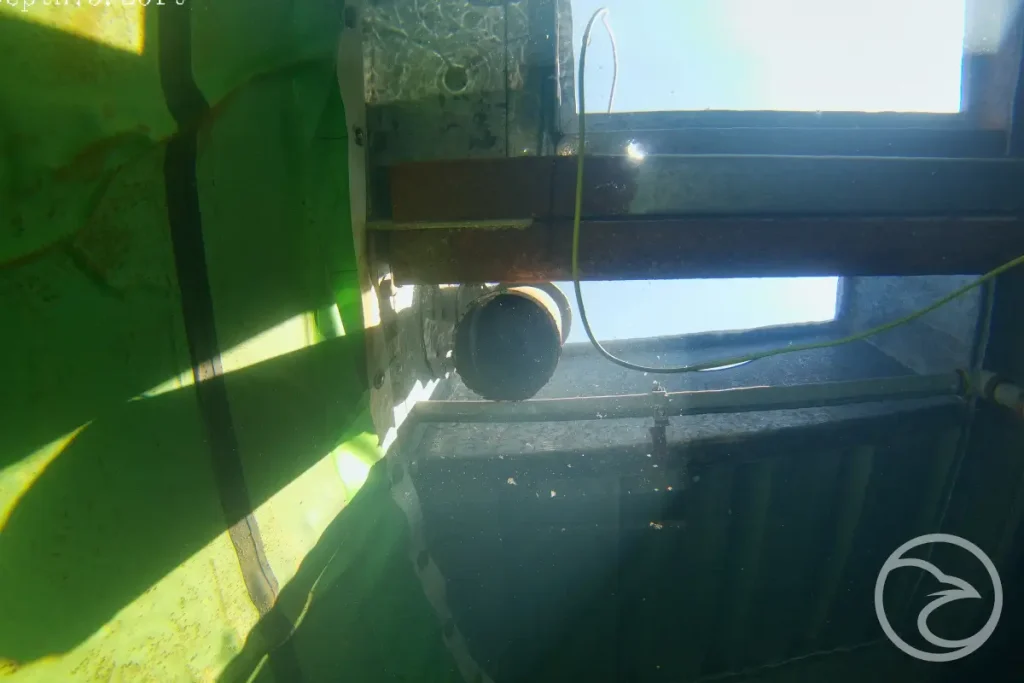
ROVs are designed to access difficult areas. They can operate in tight, deep, or contaminated environments.
Divers may face limitations in:
- confined spaces
- low visibility conditions
- hazardous water quality
This makes ROVs more flexible for complex inspections.
When Diver Inspection Might Still be Used
Despite the advantages of ROVs, diver inspection is not completely obsolete.
It may still be used in situations where:
- physical repairs are required during inspection
- tactile feedback is necessary
- regulations specifically require diver involvement
However, even in these cases, ROVs are often used first for assessment. To better understand decision scenarios, explore when to use rov inspection.
Common Challenges in Underwater Tank Inspection
Underwater environments create several inspection challenges.
Some of the most common include:
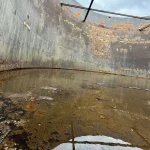
- poor visibility due to sediment
- biofilm or algae buildup
- corrosion on internal surfaces
- restricted movement inside the tank
These conditions can significantly impact inspection quality. ROVs are designed to operate effectively in such environments. They use lighting systems and stable camera platforms to maintain visibility.
Which Option is Better?
In most modern applications, ROV inspection is the preferred solution.
It offers:
- improved safety
- consistent inspection data
- reduced operational costs
- minimal disruption to operations
Diver inspection still has specific use cases. However, its role is becoming more limited as ROV technology advances.
Final Thoughts
Choosing between ROV and diver inspection depends on your specific requirements. However, when comparing ROV vs diver inspection, the industry trend is clear.
ROV inspection is becoming the standard approach for underwater tank inspection. It provides a safer, more efficient, and more reliable way to assess tank conditions.
As technology continues to improve, the shift toward robotic inspection will only accelerate.