Fire water storage tanks are a critical part of fire protection systems. Whether installed at industrial facilities, commercial buildings, warehouses, or infrastructure sites, these tanks must remain ready to supply water during an emergency. The condition of the tank liner plays a key role in maintaining storage capacity, preventing leaks, and protecting the tank from internal deterioration.
Unlike potable water liners, fire water tank liners are designed to support long-term water storage for fire protection rather than drinking water applications. They must withstand years of continuous water exposure, changing environmental conditions, and minimal operational use while maintaining reliable performance.
This fire water tank liner guide explains how fire water tank liners work, the materials commonly used, common causes of liner damage, inspection requirements, repair options, and when replacement becomes the most practical solution. For a broader overview of liner materials and applications, explore our water tank liner guide.
What is a Fire Water Tank Liner?
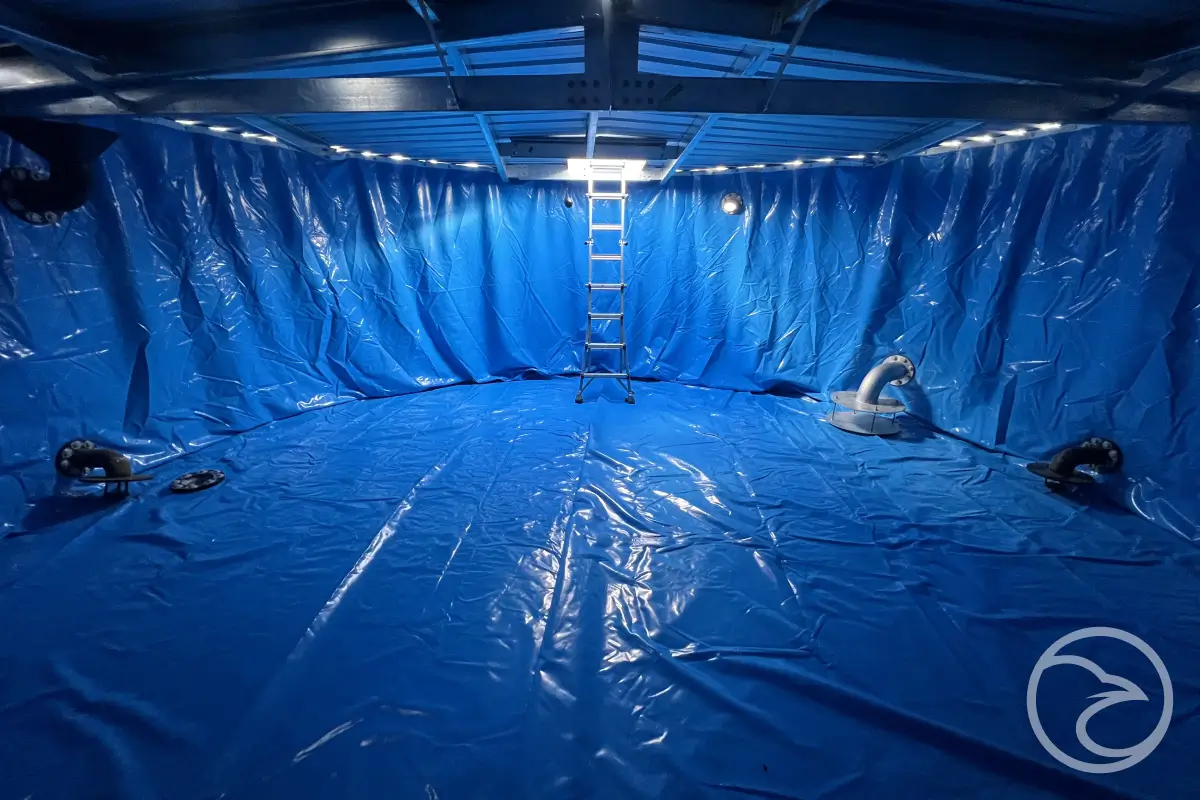
A fire water tank liner is a flexible waterproof membrane installed inside a fire water storage tank to prevent leaks and protect the tank structure from corrosion and deterioration. The liner creates a barrier between the stored water and the internal tank surface, helping preserve both the tank and its storage capacity over many years.
Fire water tank liners are used in a wide range of storage systems, including:
- steel tanks
- concrete tanks
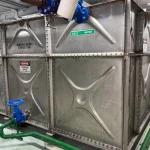
- modular panel tanks
- GRP tanks
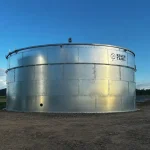
- bolted steel tanks
Rather than replacing an ageing tank, many facilities choose to install or replace the internal liner as part of a refurbishment project. This approach can extend the operational life of the existing asset while reducing the cost and disruption associated with full tank replacement.
Although fire water tanks remain idle for long periods, the liner is continuously exposed to water and environmental conditions. As a result, regular inspections and preventative maintenance are essential for maintaining system reliability.
Why Fire Water Tank Liners Matter
A fire protection system is only effective if sufficient water is available when it is needed. Even relatively small leaks can gradually reduce stored water volume, affecting system performance during an emergency.
A properly specified fire water tank liner helps maintain the integrity of the storage system by protecting both the stored water and the tank itself.
Key benefits include:
- preventing water loss
- reducing internal corrosion
- protecting concrete and steel surfaces
- extending tank service life
- reducing maintenance requirements
- improving long-term asset reliability
Liners also help reduce deterioration caused by continuous contact between water and the tank walls. Without this protective barrier, corrosion and structural wear may eventually lead to expensive repairs or premature replacement.
For facilities operating under scheduled inspection and maintenance programmes, maintaining the liner is often more cost-effective than addressing extensive structural damage later.
Common Materials Used for Fire Water Tank Liners
Different liner materials provide different performance characteristics. The most appropriate choice depends on the tank design, environmental conditions, expected service life, and maintenance strategy.
| Material | UV Resistance | Durability | Fire Water Suitability | Typical Lifespan* |
|---|---|---|---|---|
| PVC | Moderate | Good | Excellent | 10–20 years |
| EPDM | Excellent | Excellent | Excellent | 20–30 years |
| HDPE | Excellent | Excellent | Excellent | 20–30 years |
| Polypropylene | Good | Excellent | Suitable for selected applications | 20–30 years |
*Actual service life depends on installation quality, maintenance, environmental exposure, and operating conditions.
PVC Fire Water Tank Liners
PVC remains one of the most commonly used liner materials due to its flexibility and ease of fabrication.
It performs well in many fire water storage applications and can often be repaired if localised damage occurs. Certified PVC tank liners are widely used in commercial and industrial storage tanks where reliable waterproofing is required.
Although PVC provides good durability, long-term UV exposure may gradually affect material performance if tanks are left exposed without adequate protection.
EPDM Fire Water Tank Liners
EPDM is a synthetic rubber membrane recognised for its flexibility and excellent resistance to weathering.
Because fire water tanks are frequently installed outdoors, EPDM performs well under prolonged exposure to sunlight, temperature fluctuations, and changing environmental conditions.
Its flexibility also allows the liner to accommodate minor structural movement without placing excessive stress on welded joints or fixing points.
HDPE Fire Water Tank Liners
HDPE offers excellent puncture resistance and long-term durability.
It is commonly selected for large fire water storage tanks where mechanical strength and UV resistance are priorities.
Because HDPE is less flexible than PVC or EPDM, installation requires specialised welding techniques to ensure durable seams throughout the liner system.
Polypropylene Fire Water Tank Liners
Polypropylene liners combine strong chemical resistance with good structural stability.
Although they are more commonly associated with industrial process water, polypropylene liners may also be used in selected fire water applications where operating conditions require enhanced material performance.
Material selection should always consider the specific project requirements rather than relying solely on general performance characteristics.
Common Problems Affecting Fire Water Tank Liners
Even well-maintained liner systems gradually deteriorate over time. Environmental conditions, ageing materials, and mechanical stress can all reduce liner performance if left unaddressed.
Understanding the most common forms of damage helps identify issues before they affect the reliability of the fire protection system.
Punctures
Sharp objects, maintenance equipment, or accidental impact may create punctures in the liner.
Small punctures are often repairable when detected early.
Seam Failure
Welded or bonded seams experience ongoing stress as the tank expands and contracts with changing temperatures.
If seam deterioration is identified during inspection, prompt repair helps prevent larger failures.
UV Degradation
Outdoor tanks experience continuous exposure to sunlight.
Over time, ultraviolet radiation may reduce flexibility and increase the likelihood of cracking or material fatigue.
Mechanical Damage
Maintenance activities inside the tank may accidentally damage the liner through abrasion or impact.
Using appropriate inspection and maintenance procedures helps minimise unnecessary wear.
Ageing and Material Fatigue
Even without obvious damage, liner materials gradually lose flexibility over many years of service.
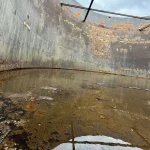
Recurring leaks, brittle surfaces, and repeated repairs often indicate that the liner is approaching the end of its service life.
Read how long do tank liners last to learn how material, installation and maintenance influence service life.
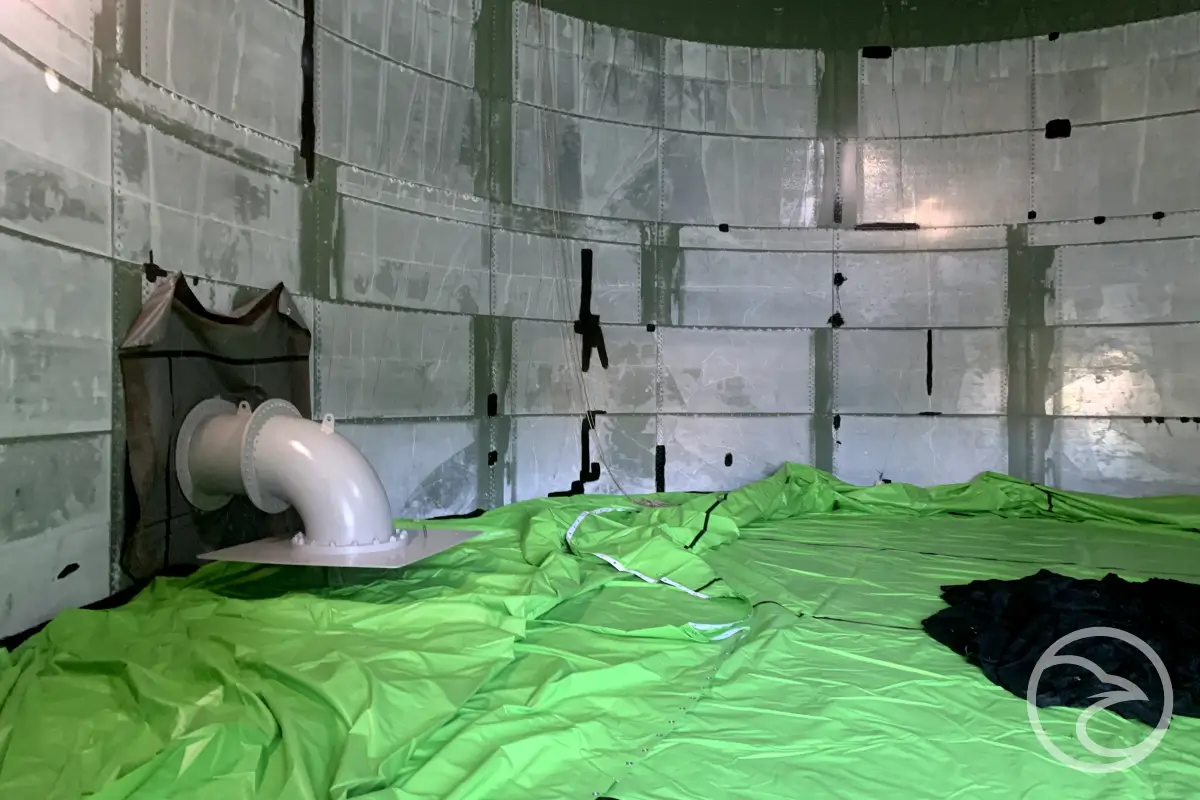
How to Inspect a Fire Water Tank Liner
Routine inspection is one of the most effective ways to maintain the reliability of a fire water storage system. While fire water tanks may remain unused for long periods, the liner is continuously exposed to water, environmental conditions, and natural material ageing.
A fire water tank liner inspection helps identify developing issues before they affect the tank’s ability to retain its full storage capacity. Early detection also allows minor defects to be repaired before they become more extensive and costly.
A typical inspection focuses on both the liner itself and the condition of the surrounding tank structure.
Technicians generally assess:
- visible leaks or signs of water loss
- punctures, tears, or abrasions
- seam condition
- pipe penetrations and connection points
- anchor systems and fixing details
- signs of UV degradation
- wrinkles, stretching, or movement within the liner
- corrosion or structural deterioration behind the liner where accessible
Regular fire tank inspections help identify potential issues before they affect system performance.
How Often Should Fire Water Tank Liners be Inspected?
Inspection frequency depends on the age of the liner, environmental conditions, and the maintenance programme for the fire protection system.
Many organisations include liner inspections as part of their broader fire protection maintenance schedule to help ensure storage capacity and system reliability are maintained throughout the life of the asset.
In Australia, fire protection systems are commonly maintained in accordance with AS 1851 – Routine Service of Fire Protection Systems and Equipment. While the standard covers the ongoing servicing of fire protection systems, the condition of the fire water storage tank and its liner should also be considered as part of a comprehensive maintenance strategy.
Additional inspections may be appropriate:
- after severe storms or flooding
- following structural repairs to the tank
- if unexplained water loss is detected
- after major maintenance work
- before returning an out-of-service tank to operation
Keeping inspection records over time helps identify gradual deterioration and supports more effective asset management.
Fire Water Tank Liner Repair
Not every damaged liner requires replacement. In many cases, fire water tank liner repair can restore watertight performance while extending the service life of the existing liner.
The suitability of a repair depends on several factors, including the location of the damage, the age of the liner, and its overall condition.
Professional repairs are commonly carried out for:
- isolated punctures
- small tears
- localised seam failures
- accidental mechanical damage
- minor installation defects
Using repair materials that are compatible with the original liner is essential for achieving reliable long-term performance.
When is Repair the Right Option?
Repair is generally the preferred solution when the damage is localised and the liner remains structurally sound.
A repair may be appropriate if:
- the liner is relatively new
- only one or two damaged areas are present
- seams remain in good condition
- there is no widespread UV degradation
- the material has retained its flexibility
Addressing these issues early often prevents more extensive deterioration and helps maximise the remaining service life of the liner.
When Should a Fire Water Tank Liner be Replaced?
Although repairs can extend the life of a liner, replacement eventually becomes the more practical solution when deterioration affects a significant portion of the membrane.
Replacement should be considered when:
- multiple leaks develop across the liner
- repeated repairs are required
- the material has become brittle
- UV degradation is widespread
- seam failures occur in several locations
- the liner has reached the end of its expected service life
Installing a new liner restores the complete waterproof barrier and reduces the likelihood of ongoing maintenance issues.
If you’re evaluating whether a damaged liner can still be repaired, see our water tank liner repair vs replacement guide for a detailed comparison of both options.
Factors that Affect Fire Water Tank Liner Lifespan
The lifespan of a fire water tank liner depends on far more than the material itself. Installation quality, operating conditions, and ongoing maintenance all influence long-term performance.
The most significant factors include:
UV Exposure
Fire water tanks installed outdoors experience continuous exposure to sunlight. Choosing a UV-resistant liner and carrying out regular inspections can help reduce long-term deterioration.
Installation Quality
Correct fabrication, seam welding, anchoring, and testing all contribute to the durability of the liner. Even high-quality materials may fail prematurely if installed incorrectly.
Maintenance Programme
Routine inspections help identify minor issues before they develop into larger defects. Preventative maintenance generally reduces repair costs over the life of the liner.
Tank Movement
Small structural movements caused by temperature changes or foundation settlement can place additional stress on the liner over time.
Water Quality
Although fire water is not intended for drinking, sediment, biological growth, and water chemistry can still influence liner condition over extended periods.
Conclusion
This Fire Water Tank Liner Guide has explained how liners protect fire water storage systems by preventing leaks, reducing corrosion, and extending the operational life of storage tanks. Regular inspections, timely repairs, and appropriate maintenance all contribute to reliable long-term performance.
While many liner defects can be repaired, widespread deterioration or repeated failures may indicate that replacement is the more practical long-term solution. Assessing the condition of the liner through routine inspections helps identify the most appropriate maintenance strategy before minor issues become major repairs.