
Steel tanks are widely used for water storage across commercial, industrial, agricultural, and infrastructure applications. However, not every steel tank uses the same material or protective system.
Hot-dipped galvanised steel and stainless steel are two common options for demanding storage environments. Both materials provide strength and corrosion resistance, but they achieve these properties differently.
They also differ in cost, maintenance requirements, appearance, fabrication, and suitability for specific environments. Choosing between them requires more than comparing their initial appearance.
The stored liquid, surrounding environment, budget, and project requirements can all influence material selection. This guide compares hot-dipped galvanised and stainless steel tanks across their most important characteristics.
What is a Hot-Dipped Galvanised Steel Tank?
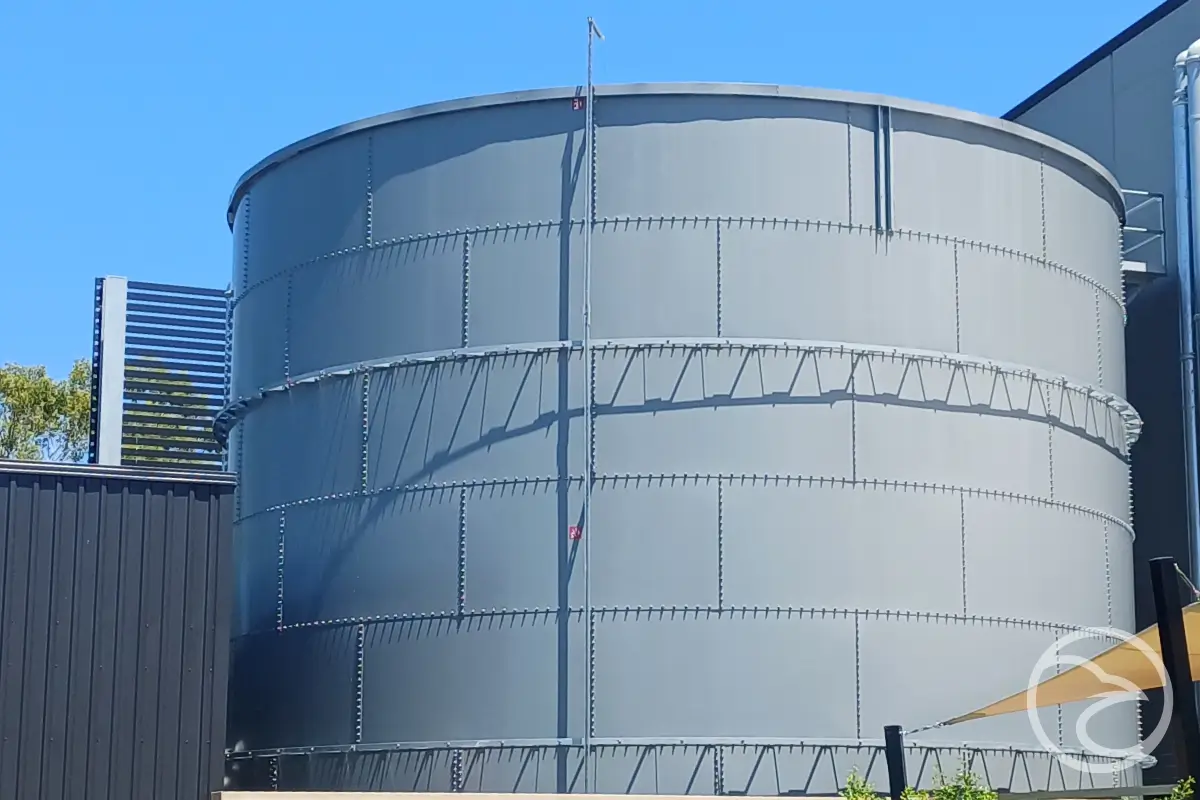
A hot-dipped galvanised tank uses steel components protected through the hot-dip galvanising process. During galvanising, prepared steel is immersed in molten zinc.
The process creates a metallurgically bonded protective coating across exposed steel surfaces. This coating separates the underlying steel from surrounding environmental conditions.
Zinc also provides sacrificial protection to exposed steel in certain circumstances. Hot-dipped galvanised steel is commonly selected where strength and practical corrosion protection are required.
Applications can include:
- Water storage
- Fire water storage
- Agricultural water systems
- Commercial facilities
- Industrial sites
- Infrastructure projects
- Rural properties
Tank design and internal protection can vary according to the intended application. The stored liquid should therefore be considered alongside the structural material.
Explore our galvanised steel tanks for reliable water storage across commercial, industrial, and large-scale applications.
What is a Stainless Steel Tank?
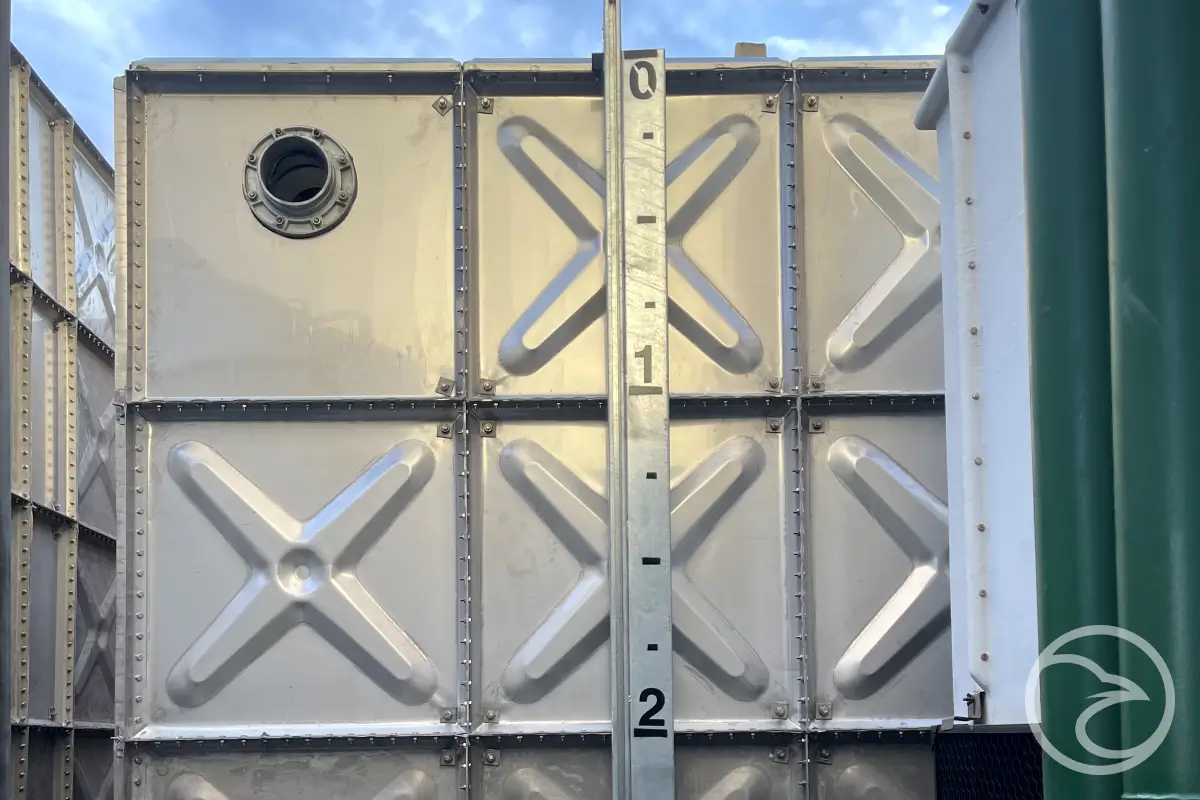
Stainless steel is an alloy containing iron, chromium, and other alloying elements. Chromium is particularly important for its corrosion-resistant properties. It allows a thin passive oxide layer to develop naturally on the material’s surface.
This passive layer can reform when damaged under suitable conditions. Different stainless steel grades contain different combinations of alloying elements. Therefore, not every stainless steel tank provides identical corrosion resistance.
Common stainless steel grades include 304 and 316. Grade 316 contains molybdenum, providing additional resistance in certain chloride-containing environments.
Material grade should always match the expected storage and environmental conditions.
For projects requiring stainless steel construction, explore our stainless steel panel tanks and available water storage solutions.
What is the Main Difference?
The main difference is how each material achieves corrosion resistance. Hot-dipped galvanised steel relies on a zinc coating over the structural steel. Stainless steel achieves corrosion resistance through its alloy composition and passive surface layer.
This fundamental difference affects many other characteristics.
These include:
- Material cost
- Fabrication
- Maintenance
- Surface behaviour
- Environmental suitability
- Chemical compatibility
- Appearance
- Repair requirements
Neither material is automatically suitable for every storage application. Selection should reflect actual operating conditions.
How do they Compare for Corrosion Resistance?
Both materials are used because they can resist corrosion better than unprotected carbon steel. However, their corrosion mechanisms differ considerably. Hot-dipped galvanised steel uses zinc to protect the underlying steel.
The zinc layer acts as a barrier between steel and the surrounding environment. Stainless steel depends on its chromium-rich passive surface.
This passive layer provides corrosion resistance without a separate zinc coating. Environmental conditions influence both materials.
Important factors can include:
- Moisture
- Chlorides
- Temperature
- pH
- Chemicals
- Salinity
- Pollution
- Stored liquid
The best material therefore depends on the specific environment.
How does Water Chemistry Affect the Choice?
Water chemistry is an important consideration for any water storage tank. Different water sources contain different minerals, salts, gases, and treatment chemicals. Rainwater differs from bore water.
Potable water differs from industrial process water.
Water properties worth considering include:
- pH
- Hardness
- Chloride concentration
- Salinity
- Temperature
- Dissolved oxygen
- Treatment chemicals
These properties can affect both galvanised and stainless steel. However, each material responds differently.
A material suitable for one water source may require additional protection for another. Testing can be useful when water chemistry is unusual or unknown.
Hot-Dipped Galvanised vs Stainless Steel for Chloride Exposure
Chlorides deserve particular attention when comparing steel tank materials. They can occur naturally in groundwater and coastal environments. Some industrial processes can also introduce elevated chloride concentrations.
Chlorides can affect zinc surfaces under demanding conditions. They can also create problems for certain stainless steel grades. Stainless steel is not completely immune to chloride-related corrosion.
Pitting and crevice corrosion can occur under particular conditions. The stainless steel grade becomes especially important as chloride exposure increases.
Grade 316 usually provides greater chloride resistance than grade 304. However, actual suitability still depends on concentration, temperature, and operating conditions.
For a detailed grade comparison, explore stainless steel 316 and 304 and their differences across various water storage conditions.
What about Coastal Environments?
Coastal sites can expose tanks to airborne salts and elevated humidity. These conditions can increase demands on external tank surfaces. Hot-dipped galvanised steel is widely used in many outdoor environments.
However, exposure severity should be assessed during specification. Stainless steel can also perform well in coastal conditions. The selected stainless grade remains important.
Salt deposits can accumulate on exposed surfaces. Design details may create areas where moisture remains trapped.
Regular cleaning may also be appropriate for some stainless steel installations. Material choice should reflect the site’s actual distance and exposure to marine conditions.
Which Material is Better for Freshwater?
Both materials can be suitable for freshwater applications. However, “freshwater” covers many different water chemistries. Rainwater may have relatively low mineral content.
Bore water can contain substantial dissolved minerals. Municipal water may contain treatment chemicals. River and lake water can also vary seasonally.
Therefore, freshwater alone does not determine the appropriate tank material. Hot-dipped galvanised tanks are used across many conventional water storage applications.
Stainless steel is also commonly selected where specific hygiene or material requirements apply. The complete project specification should guide the decision.
What about Potable Water?
Potable water storage requires additional attention to material suitability and water quality. Any material contacting drinking water should meet applicable requirements. This applies to both galvanised and stainless steel tank systems.
Stainless steel is commonly used where hygiene and cleanability are important. Its smooth surface can suit specialised food, beverage, and potable applications.
Hot-dipped galvanised tanks can also support appropriate water storage systems. Tank design, internal components, liners, fittings, and maintenance remain important.
The structural tank material should not be assessed in isolation. The entire storage system must suit the intended water use.
Read our guide on hot-dipped galvanised tanks suitable for different water types for more detail on pH, hardness, chlorides, and salinity.
How do they Compare for Industrial Water?
Industrial water can vary significantly between facilities. Some applications involve ordinary process water. Others contain chemicals, salts, elevated temperatures, or unusual pH levels.
This makes material selection highly application-specific. Stainless steel may suit applications requiring particular chemical resistance. However, the correct stainless grade must be selected.
Hot-dipped galvanised tanks can provide a practical solution for many general water storage applications. Additional internal protection may also be used where required.
Before selecting either material, operators should understand:
- Liquid composition
- Operating temperature
- pH range
- Chloride concentration
- Cleaning chemicals
- Filling frequency
- Required storage capacity
Specialist advice may be appropriate for aggressive industrial liquids.
Which Option has Lower Initial Costs?
Initial cost can be an important difference between these tank materials. Stainless steel is generally a more expensive raw material than carbon steel. Its fabrication can also require specialised processes and equipment.
Hot-dipped galvanised steel can provide corrosion protection without constructing the entire tank from stainless steel. This can make galvanised construction economically attractive for many large storage applications.
However, tank price depends on more than material selection.
Important cost factors include:
- Tank capacity
- Steel quantity
- Design requirements
- Tank configuration
- Installation
- Foundations
- Fittings
- Internal protection
- Site access
- Engineering requirements
A direct material price comparison therefore provides only part of the picture. Whole-project costs should be considered.
Is Stainless Steel Always the Premium Option?
Stainless steel is often associated with premium applications. However, higher material cost does not automatically make it the correct technical choice. The required performance should determine material selection.
Some applications benefit significantly from stainless steel properties. Others do not require those properties. Using a more expensive material without a clear project requirement can increase costs unnecessarily.
Conversely, selecting materials only by lowest initial price can create other limitations. The most appropriate material should match the project’s actual environment and operating requirements.
How do Maintenance Requirements Compare?
Both tank types require appropriate inspection and maintenance. Maintenance requirements depend heavily on the tank design and operating environment. Hot-dipped galvanised tanks should be inspected for changes affecting exposed surfaces or structural components.
Stainless steel also requires attention. Surface contamination and deposits can affect local conditions.
Crevices and areas with limited oxygen can become important in some stainless steel environments.
Maintenance can include:
- Routine visual inspections
- Cleaning
- Checking fittings
- Inspecting joints
- Monitoring stored water
- Removing accumulated sediment
- Assessing damaged areas
Maintenance planning should reflect the tank’s actual use. No tank material should be considered completely maintenance-free.
Which Material is Easier to Clean?
Stainless steel is commonly chosen for applications requiring frequent cleaning. Its smooth surface can be beneficial in hygienic environments. Food and beverage facilities often use stainless steel for this reason.
Pharmaceutical and specialised processing facilities may also require highly cleanable surfaces. However, general water storage does not always require the same cleaning standards.
Hot-dipped galvanised tanks can be entirely appropriate where specialised sanitary processing is unnecessary. The required cleanliness level should therefore influence the material decision.
A fire water tank has different operational requirements from a food-processing vessel.
How do they Compare for Tank Fabrication?
Fabrication requirements differ between galvanised and stainless steel tanks. Hot-dipped galvanised components are fabricated before being galvanised. The galvanising process then protects exposed steel surfaces.
Component dimensions must account for handling and galvanising requirements. Drainage and venting also need consideration during component design. Stainless steel fabrication requires appropriate welding techniques and contamination control.
Tools used on carbon steel can contaminate stainless surfaces. Weld treatment may also be necessary depending on the application.
Therefore, both materials require suitable fabrication expertise. The processes are simply different.
What Happens if the Surface is Scratched?
Surface damage behaves differently on the two materials. A galvanised surface has a zinc layer protecting the underlying steel. Small exposed areas may receive sacrificial protection from surrounding zinc.
Larger damaged areas may require appropriate repair. Stainless steel does not depend on a separate metallic coating. Its passive surface can reform when oxygen is available under suitable conditions.
However, stainless steel can still experience corrosion.
Contamination, chlorides, crevices, and inappropriate cleaning can create localised problems. Neither material should be considered immune to damage or poor environmental conditions.
Do Hot-Dipped Galvanised Tanks need Liners?
Some galvanised tank systems use internal liners. The liner can separate stored water from the structural tank components. This allows the structural steel and water-contact material to perform different functions.
A liner may be selected according to:
- Water type
- Potable requirements
- Temperature
- Chemical composition
- Tank design
- Project specification
This approach can provide flexibility for different storage requirements. However, the liner must be compatible with the stored liquid.
It should also be installed and maintained according to the system requirements.
Do Stainless Steel Tanks need Liners?
Stainless steel tanks are often used without separate internal liners. The stainless steel itself can provide the liquid-contact surface. This can simplify some applications.
However, liner-free construction does not automatically mean universal chemical compatibility. The stainless grade still needs to suit the stored liquid.
Chlorides can be particularly important. Strong chemicals and elevated temperatures may require specialised grades.
Therefore, eliminating a liner does not eliminate material-selection requirements.
How does Appearance Differ?
The visual difference between the two materials is easy to recognise. Hot-dipped galvanised steel typically has a characteristic grey metallic appearance. Its surface can include visible crystalline patterns.
The appearance may also vary between individual components. These differences do not necessarily indicate differences in functional performance. Stainless steel usually provides a more uniform metallic appearance.
Different surface finishes are also available. Appearance may matter for tanks installed in highly visible architectural locations.
For most industrial applications, technical performance remains more important than surface appearance.
Which is Better for Large Water Storage Tanks?
Tank capacity can significantly influence material decisions. Large tanks require substantial quantities of structural material. This can make material costs particularly important.
Hot-dipped galvanised steel is often practical for large-capacity water storage systems. It combines structural steel strength with external corrosion protection.
Sectional construction can also support transportation and installation requirements. Stainless steel may be selected where project specifications justify its material properties.
However, its higher material cost can become significant at larger capacities. The final decision should consider total project requirements rather than capacity alone.
What about Fire Water Storage?
Fire water storage has specific operational and compliance requirements. Tank capacity, reliability, access, and system design are particularly important. Hot-dipped galvanised steel is commonly associated with large fire water storage systems.
Its structural properties can suit large sectional tank construction. Stainless steel can also be used where project specifications require it. However, material choice is only one part of fire tank design.
Applicable standards and engineering requirements should guide the complete system. The tank must support the required fire protection infrastructure.
Which Material offers Greater Design Flexibility?
Both materials can support different tank shapes and configurations. However, project scale can influence practical design options. Galvanised sectional tanks can be useful for large storage capacities.
Individual panels can be transported separately and assembled on site. This can help where site access is limited. Stainless steel tanks can also be fabricated in different forms.
Fabrication complexity and transportation requirements may influence larger designs. Available site space should also be considered.
Capacity, dimensions, access, and installation method all affect final tank configuration.
Environmental Conditions Matter
Tank material should be selected for both internal and external conditions. The stored water creates the internal environment.
Weather and site conditions create the external environment.
External factors may include:
- Rainfall
- Humidity
- Coastal salts
- Industrial pollution
- Temperature
- Dust
- Chemical exposure
A tank located inland faces different conditions from one near the coast. Industrial sites can create another set of exposures.
Therefore, water compatibility alone cannot determine the correct material. Both sides of the tank environment should be assessed.
Hot-Dipped Galvanised vs Stainless Steel Tanks: Key Differences
Hot-dipped galvanised and stainless steel tanks can both provide reliable water storage. However, they achieve corrosion resistance through different material systems. Hot-dipped galvanised steel uses a zinc coating to protect structural steel.
Stainless steel relies on alloy composition and a passive surface layer. Galvanised steel can provide a practical option for large-capacity water storage. Stainless steel can offer advantages where hygiene or specific chemical resistance is required.
Initial costs also differ. Stainless steel generally involves higher material and fabrication costs. However, price should never be the only selection factor.
Water chemistry, tank capacity, environmental exposure, maintenance, and project specifications all matter. The best material depends on the conditions each tank will actually experience.
Understanding those conditions helps create a more appropriate and efficient water storage system.