
Choosing the right stainless steel grade is an important part of specifying a water storage tank. Grades 304 and 316 are two common options for stainless steel tanks. Both provide strength, durability, and good corrosion resistance.
However, they are not identical. Their chemical composition differs, which affects performance under certain water and environmental conditions.
Grade 316 contains molybdenum, giving it greater resistance to some forms of corrosion. This difference becomes particularly important when chlorides are present. That does not mean every water tank requires Grade 316.
Grade 304 can perform effectively across many general water storage environments. The correct choice depends on water chemistry, location, exposure, and operating conditions.
This guide compares 304 and 316 stainless steel water tanks and explains where each grade may be appropriate.
What are 304 and 316 Stainless Steel?
304 and 316 are both austenitic stainless steel grades. Austenitic stainless steels contain chromium and nickel as important alloying elements. Chromium plays a major role in corrosion resistance.
It reacts with oxygen to create a thin passive layer on the stainless steel surface. This layer protects the underlying metal from many corrosive conditions.
Nickel contributes to the stability and properties of the austenitic structure.
Grades 304 and 316 share many characteristics, including:
- good general corrosion resistance;
- strong mechanical properties;
- good fabrication characteristics;
- smooth surfaces;
- good temperature resistance;
- suitability for many water storage applications.
The main difference is their chemical composition. Grade 316 contains molybdenum, while standard Grade 304 does not contain this element in comparable amounts.
This difference improves Grade 316’s resistance to certain aggressive conditions.
Our stainless steel panel tanks provide reliable water storage solutions with material options for different operating environments.
What is 304 Stainless Steel?
Grade 304 is one of the most widely used stainless steel grades. It contains chromium and nickel as its primary alloying elements. Typical Grade 304 stainless steel contains approximately 18% chromium and 8% nickel. Exact composition can vary within the limits defined by the relevant standard.
This composition provides good corrosion resistance across many general environments. A 304 stainless steel tank can therefore suit various water storage applications. Grade 304 also offers good formability and weldability. These properties make it practical for manufacturing different tank components and configurations.
An SS304 water tank may be suitable where the stored water and surrounding environment are not excessively aggressive. However, Grade 304 is not immune to corrosion.
Chloride-rich water, salt exposure, unsuitable cleaning chemicals, or poor tank design can create more challenging conditions.
These factors should be considered before specifying a 304 stainless steel water tank.
What is 316 Stainless Steel?
Grade 316 is another widely used austenitic stainless steel. Its composition is similar to Grade 304, but it includes molybdenum. Typical 316 stainless steel composition includes chromium, nickel, and approximately 2–3% molybdenum.
The exact percentages depend on the applicable material specification. Molybdenum is particularly important because it improves resistance to localised corrosion in certain environments. This includes greater resistance to chloride-related pitting and crevice corrosion compared with Grade 304.
For this reason, a 316 stainless steel tank can be considered for more demanding water storage conditions. An SS316 water tank may be appropriate where chloride exposure or environmental conditions create greater corrosion risks.
Grade 316 is commonly associated with coastal and marine environments for the same reason. However, Grade 316 is still not completely corrosion proof.
Water chemistry, fabrication, surface condition, temperature, deposits, and maintenance can all influence its performance.
304 vs 316 Stainless Steel: Key Differences
The fundamental difference between 304 and 316 stainless steel comes from their chemical composition.
That difference affects corrosion resistance and suitability for particular environments.
| Factor | 304 Stainless Steel | 316 Stainless Steel |
|---|---|---|
| Stainless steel family | Austenitic | Austenitic |
| Chromium | Approximately 18% | Approximately 16–18% |
| Nickel | Approximately 8–10.5% | Approximately 10–14% |
| Molybdenum | Generally absent | Approximately 2–3% |
| General corrosion resistance | Good | Very good |
| Chloride resistance | Lower | Higher |
| Pitting resistance | Good in suitable conditions | Greater in chloride environments |
| Typical environment | General conditions | More demanding conditions |
| Relative material cost | Generally lower | Generally higher |
These differences do not make one grade universally superior. The objective is to select the grade appropriate for the actual storage environment.
Using Grade 316 where Grade 304 performs adequately may increase costs without providing a necessary practical advantage. Using Grade 304 in an unsuitable aggressive environment can create greater corrosion risks.
Tank requirements depend heavily on intended use, making stainless steel water tank applications an important consideration during system selection.
Chemical Composition of 304 and 316 Stainless Steel
Understanding composition helps explain why these two grades behave differently. Both rely heavily on chromium for corrosion resistance. Chromium creates the passive oxide layer that protects the stainless steel surface.
Nickel contributes to the structure and properties of both grades. The major distinguishing element is molybdenum.
Grade 304 Composition
Grade 304 typically contains:
- 18–20% chromium;
- 8–10.5% nickel;
- small amounts of carbon;
- manganese;
- silicon;
- phosphorus;
- sulphur;
- iron as the balance.
Exact limits depend on the relevant specification.
Grade 316 Composition
Typical 316 stainless steel composition includes:
- 16–18% chromium;
- 10–14% nickel;
- 2–3% molybdenum;
- small amounts of carbon;
- manganese;
- silicon;
- phosphorus;
- sulphur;
- iron as the balance.
Molybdenum creates the most important practical distinction for many water storage environments. It improves resistance to localised corrosion, particularly where chlorides are present.
This is why chemical composition matters when comparing stainless steel water tank materials.

Corrosion Resistance: 304 vs 316
Both 304 and 316 are corrosion-resistant stainless steels. However, corrosion resistance is not a simple yes-or-no characteristic. Performance changes according to the surrounding conditions.
Grade 304 provides strong general corrosion resistance in many normal environments. It can perform well where water chemistry is suitable and chloride exposure remains controlled.
Grade 316 provides additional protection against some localised corrosion mechanisms. This advantage becomes particularly relevant in chloride-containing environments.
Two forms of localised corrosion deserve particular attention.
Pitting Corrosion
Pitting creates small, localised areas of corrosion on the stainless steel surface. These areas can penetrate deeply while much of the surrounding surface still appears undamaged.
Chlorides can increase the risk of pitting. Grade 316 generally offers greater resistance to chloride-induced pitting than Grade 304.
Crevice Corrosion
Crevice corrosion can develop in narrow spaces where local conditions differ from the surrounding environment. Potential locations include joints, deposits, seals, and areas where water becomes trapped.
Chlorides can make these conditions more aggressive. Grade 316 generally provides better resistance, but appropriate tank design remains important.
Find out how long do stainless steel panel tanks last and how corrosion, maintenance, and operating conditions influence their lifespan.
How Chlorides Affect 304 and 316 Stainless Steel
Chlorides are an important consideration when selecting stainless steel for water tanks. They can affect the stability of the protective passive layer.
Under certain conditions, chloride exposure can contribute to localised corrosion.
Chlorides can reach a tank from several sources:
- stored water;
- coastal air;
- salt deposits;
- cleaning products;
- industrial processes;
- surrounding chemicals.
The concentration of chlorides is only one factor. Temperature, oxygen availability, deposits, pH, exposure duration, and tank geometry can also affect corrosion behaviour.
This makes simple chloride limits difficult to apply universally. Grade 316 generally provides greater chloride resistance because of its molybdenum content.
This can make it preferable where chloride exposure is higher. However, even Grade 316 can experience corrosion under sufficiently aggressive conditions.
Correct grade selection should therefore consider the complete operating environment.
Grade 304 Stainless Steel Water Tanks: when are they Suitable?
A 304 stainless steel water tank can be a practical option for many general storage applications. Grade 304 may be suitable when water chemistry and environmental conditions are relatively moderate.
Possible applications can include:
- general water storage;
- certain potable water systems;
- commercial building water storage;
- indoor installations;
- process water with suitable chemistry;
- low-chloride environments.
The actual application alone should not determine the material. For example, two potable water tanks can experience very different conditions. One may operate indoors with controlled water chemistry.
Another may stand outdoors near the coast while storing water with higher chloride concentrations. Both store potable water, but their corrosion exposure differs significantly.
This is why Grade 304 suitability should be evaluated against actual operating conditions.
Grade 316 Stainless Steel Water Tanks: when are they Suitable?
A 316 stainless steel water tank can provide additional corrosion resistance for more demanding conditions. Its molybdenum content makes it particularly valuable where chloride exposure presents a greater concern.
Grade 316 may be considered for:
- coastal locations;
- higher-chloride environments;
- demanding outdoor installations;
- selected industrial applications;
- certain process water systems;
- environments exposed to salt or chemical contaminants.
This does not mean every tank in these categories automatically requires Grade 316. A detailed assessment should consider both internal and external conditions.
A tank can face aggressive exposure from the surrounding environment even when the stored water is relatively mild. The reverse can also occur.
Indoor tanks can contain water with chemistry that creates significant corrosion risks. Grade selection should therefore consider both sides of the tank wall.
Is 316 Stainless Steel Always Better than 304?
Grade 316 provides greater resistance to certain corrosion mechanisms. However, that does not make it the correct choice for every water tank. The most suitable material is the one that meets the actual operating requirements.
Grade 304 can provide effective performance under appropriate conditions. Specifying Grade 316 unnecessarily can increase the material cost of the tank. Conversely, selecting Grade 304 purely because it costs less can be a poor decision in aggressive environments.
The better question is not whether 316 is better than 304. The better question is whether the additional corrosion resistance of 316 is necessary for the application.
Water chemistry and environmental exposure can help answer that question.
304 vs 316 Stainless Steel Water Tanks in Different Environments
Tank location can significantly affect material performance. The same stainless steel grade can experience very different conditions across different installations.
Indoor Installations
Indoor environments can reduce exposure to rain, salt, and some airborne contaminants. Grade 304 may suit many indoor water storage applications when water chemistry is appropriate.
However, indoor installation does not eliminate corrosion risks. Humidity, chemicals, condensation, and stored water composition should still be considered.
Outdoor Installations
Outdoor tanks face additional environmental exposure. Rain, airborne contaminants, temperature changes, and moisture can influence surface conditions.
The local environment should therefore form part of grade selection. Grade 304 can still suit some outdoor installations.
More aggressive outdoor environments may favour Grade 316.
Coastal Environments
Coastal locations require particular attention. Airborne salts can deposit chlorides onto exposed stainless steel surfaces.
This can create corrosion risks even when the tank contains low-chloride water. Grade 316 generally offers an advantage over Grade 304 under chloride exposure.
Tank design, surface cleaning, and maintenance remain important.
Industrial Environments
Industrial facilities can expose tanks to chemicals, fumes, dust, and process contaminants. The exact exposure varies considerably between sites.
Grade selection should therefore reflect the actual chemicals and operating conditions present. Neither 304 nor 316 should be selected based only on the word “industrial.”
Potable Water Systems
Both 304 and 316 stainless steel can be used in suitable potable water systems. The appropriate grade depends on water chemistry and other operating conditions.
Hygienic design, fabrication quality, fittings, and maintenance are also important. Material grade alone does not determine whether the complete tank is suitable for drinking water.
Other Factors that Affect Stainless Steel Tank Performance
Choosing between 304 and 316 is important, but grade selection is only one part of tank performance. Several other factors can influence corrosion resistance and service life.
Fabrication Quality
Poor fabrication can compromise stainless steel performance. Welding procedures, finishing, handling, and contamination control should be appropriate for stainless steel.
Surface Contamination
Contact with carbon steel particles can contaminate stainless steel surfaces. Contamination can create areas where rust or corrosion becomes visible.
Suitable tools and fabrication practices help reduce this risk.
Weld Condition
Welded areas require appropriate procedures and finishing. Heat tint and other surface changes can reduce local corrosion resistance when improperly managed.
Tank Design
Poorly designed crevices can trap water and contaminants. These local environments can increase corrosion risk.
Good design should consider drainage, accessibility, and areas where deposits may accumulate.
Water Stagnation
Long periods of stagnation can change local water conditions. This may affect corrosion behaviour in some systems.
Water turnover should therefore be considered during tank sizing and operation.
Deposits
Sediment and deposits can create localised conditions beneath their surfaces. Regular inspection and appropriate cleaning can help manage accumulation.
Cleaning Chemicals
Cleaning products must be compatible with the tank material. Products containing aggressive chemicals can damage stainless steel under unsuitable conditions.
Temperature
Higher temperatures can increase the severity of some corrosion mechanisms. Water temperature should therefore form part of material selection.
These factors explain why two tanks made from the same grade can experience different service lives.
Learn more about tank types, specifications, benefits, and key considerations in our stainless steel water tanks guide.
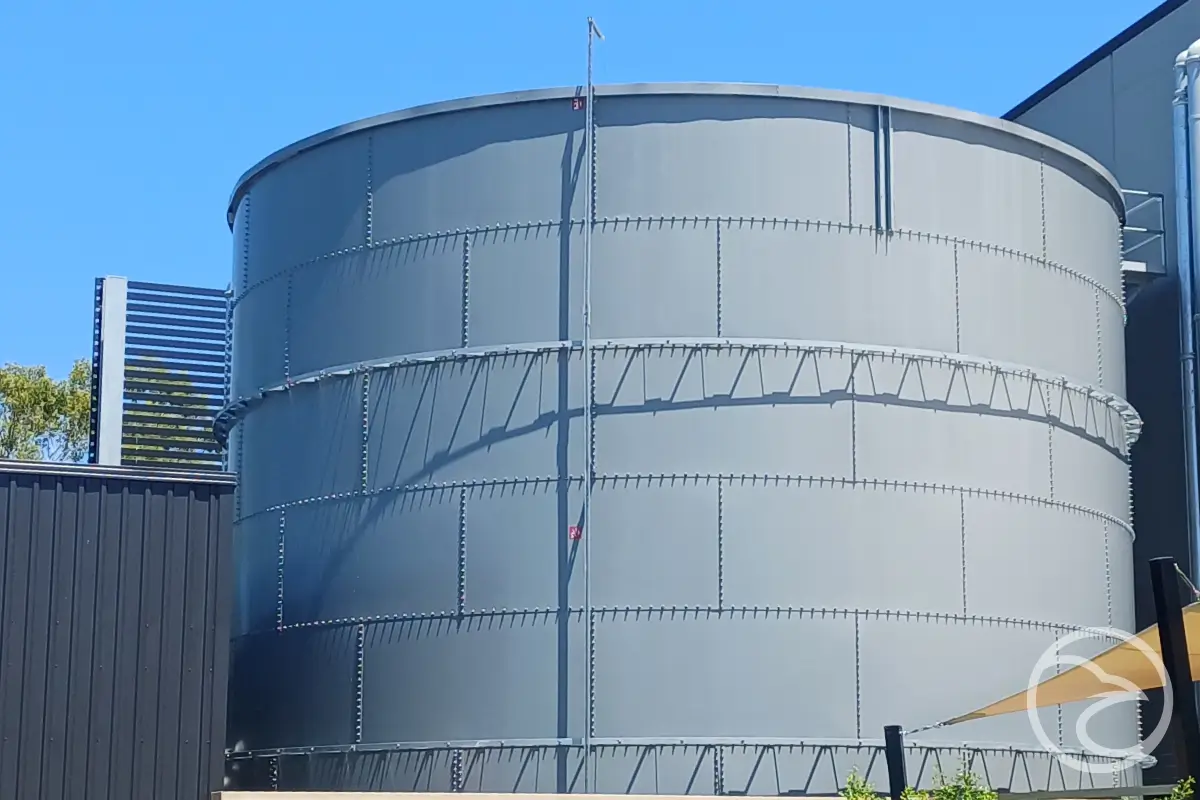
304 vs 316 Stainless Steel Panel Tanks
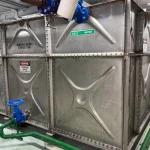
Stainless steel panel tanks use individual panels to create a complete storage structure. Both Grade 304 and Grade 316 can be considered for panel tank construction. The appropriate material depends on project conditions.
A Grade 304 stainless steel panel tank may provide an effective solution in suitable general environments. Grade 316 panels can provide greater corrosion resistance where conditions are more aggressive.
However, the panel material is not the only consideration.
Tank components can include:
- bolts and fasteners;
- seals;
- internal supports;
- external supports;
- connections;
- access components;
- pipework interfaces.
Material compatibility across the system should be considered. Using an appropriate panel grade cannot compensate for unsuitable components elsewhere in the tank.
Making the Right Choice Between 304 and 316
Grades 304 and 316 can both provide effective materials for stainless steel water tanks. Their main difference lies in chemical composition. Grade 316 contains molybdenum, which provides greater resistance to certain forms of localised corrosion.
This difference is particularly relevant where chlorides are present. Grade 304 remains suitable for many general water storage conditions. Grade 316 may provide additional protection in coastal, chloride-rich, or otherwise demanding environments.
However, grade selection should never be considered in isolation. Water chemistry, temperature, fabrication, tank design, cleaning, environmental exposure, and maintenance can all influence performance.
Understanding these factors helps determine whether Grade 304 or Grade 316 better matches a particular water storage application.