Water storage requirements vary considerably between buildings, industries, and operating environments. Some systems provide drinking water. Others support manufacturing, fire protection, sanitation, agriculture, or emergency water supplies.
These applications place different demands on water storage equipment. Stainless steel water tanks can support many of these requirements when correctly designed and specified.
Their strength, corrosion resistance, and hygienic surfaces make stainless steel suitable for diverse water storage applications. However, the same tank specification will not suit every application.
Water quality, storage volume, environmental exposure, hygiene requirements, and operating conditions can influence tank selection.
This guide explores common stainless steel water tank applications and the requirements associated with different industries.
Why is Stainless Steel Used for Different Water Storage Applications?
Stainless steel combines several properties that support water storage across different environments. One important characteristic is corrosion resistance. Stainless steel develops a passive surface layer that helps protect the underlying metal.
The material also provides substantial structural strength. This allows tanks to accommodate significant water volumes when correctly engineered.
Stainless steel has a smooth and non-porous surface. This characteristic can support cleaning and hygiene requirements.
Other useful characteristics include:
- resistance to many environmental conditions;
- suitability for indoor and outdoor installations;
- ability to withstand varying temperatures;
- compatibility with different tank capacities;
- suitability for modular tank construction;
- relatively low maintenance requirements;
- long-term structural performance.
These properties make stainless steel versatile, but application requirements should always guide the final specification.
Explore our stainless steel panel tanks for reliable water storage across a wide range of commercial and industrial applications.
Potable and Drinking Water Storage
Potable water storage is one of the most important applications for stainless steel tanks. A stainless steel potable water tank can store treated water before distribution or use.
Potable water systems require careful attention to water quality and contamination control. Tank surfaces should not compromise the quality of the stored water. They should also support appropriate cleaning and inspection procedures.
A stainless steel drinking water tank can be used within different facilities and water supply systems.
Applications can include:
- commercial buildings;
- residential developments;
- healthcare facilities;
- educational facilities;
- public buildings;
- industrial sites;
- remote facilities;
- backup drinking water systems.
The entire storage system must be suitable for potable water use. This requirement extends beyond the stainless steel tank walls.
Fittings, seals, pipework, access points, and other components can interact with the stored water. Tank design should also help protect water against external contamination.
Appropriate covers, vents, access hatches, and overflow arrangements are therefore important. Stored drinking water may also require monitoring and regular tank cleaning.
Specific requirements depend on the installation, water source, storage period, and applicable regulations.
Commercial Water Storage
Commercial buildings can require substantial volumes of stored water for everyday operations. Stainless steel water tanks can form part of the building’s main water storage or distribution system.
Potential locations include:
- office buildings;
- shopping centres;
- hotels;
- apartment developments;
- entertainment facilities;
- educational buildings;
- large commercial complexes.
Commercial systems may use tanks to provide a stable water reserve during periods of changing demand. Storage can also help maintain supply where mains pressure or availability is insufficient.
Space is often an important consideration within commercial properties. Plant rooms, basements, rooftops, and restricted service areas can limit available tank dimensions.
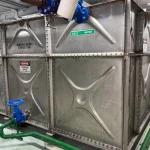
Sectional stainless steel tanks can provide flexibility in these situations. Individual panels can reach locations where transporting a complete tank would be difficult.
The final system still requires appropriate capacity, structural support, access, and connection arrangements.
Industrial and Process Water Storage
Industrial facilities often require water for much more than drinking or sanitation. Water can support manufacturing processes, equipment operation, cleaning, cooling, and other production activities.
Industrial stainless steel water tanks can provide dedicated storage for these requirements.
Common industrial applications can include:
- process water storage;
- cooling water;
- equipment washdown;
- production water;
- cleaning systems;
- operational water reserves;
- general facility water.
Industrial environments can create demanding operating conditions. Water chemistry may vary considerably between processes. Temperature and surrounding chemical exposure can also affect tank requirements.
For this reason, material compatibility should be assessed before selecting a stainless steel tank. Not every stainless steel grade is suitable for every industrial water composition. External conditions matter as well.
Industrial pollutants, chemicals, humidity, and deposits can affect stainless steel surfaces. The tank location should therefore be considered alongside the stored water.
Access for inspection and cleaning is another important factor. Industrial tanks should be positioned so critical components remain accessible throughout their service life.
Food and Beverage Applications
Water plays an important role across food and beverage operations. It can become an ingredient, support cleaning, or supply other facility processes.
These environments often place significant emphasis on hygiene and contamination control. A food grade stainless steel water tank may form part of a suitable water storage system.
However, the term “food grade” should not refer only to the base metal. The complete system can influence hygiene and water quality.
Important considerations can include:
- stainless steel grade;
- internal surface condition;
- weld quality;
- fittings and connections;
- tank drainage;
- cleaning access;
- contamination prevention.
Tank geometry can also affect cleaning. Areas that trap sediment or prevent complete drainage can create additional hygiene challenges. Food processing facilities may require different water qualities for different operations.
Ingredient water can have different requirements from washdown or general service water. The tank specification should therefore reflect the exact purpose of the stored water.
Fire Protection Water Storage
Fire protection systems require a dependable water supply when an emergency occurs. Dedicated storage may be necessary where the normal water supply cannot meet required fire protection demand.
Stainless steel tanks can provide water storage for certain fire protection systems.
Applications can include water supplies for:
- sprinkler systems;
- hydrant systems;
- fire suppression systems;
- emergency firefighting reserves.
Fire water storage differs from normal domestic or process water storage. The required volume depends on the fire protection system and applicable design requirements. Tank connections must also support the required water delivery arrangement.
Reliable access for inspection is important because the stored supply may remain unused for extended periods. A tank can appear operational while hidden internal problems develop over time.
Routine inspection therefore remains important for maintaining fire water storage reliability. Fire protection requirements should always follow the relevant standards and project specifications.
Rainwater Harvesting and Water Reuse
Rainwater harvesting can reduce dependence on mains water for suitable non-potable applications. Collected rainwater requires appropriate storage before treatment, distribution, or reuse.
Stainless steel tanks can form part of these systems.
Stored rainwater may support:
- irrigation;
- landscape watering;
- washdown;
- toilet flushing;
- cleaning;
- selected building services.
Rainwater quality can vary according to the collection surface and surrounding environment. Leaves, sediment, organic material, and airborne contaminants can enter collection systems. Effective filtration and system design are therefore important.
The tank should also provide suitable access for inspection and cleaning. If harvested rainwater is intended for potable use, additional requirements may apply.
Treatment should reflect the intended use and relevant water quality requirements. Tank material alone does not make collected rainwater safe for drinking.
Sanitation and Hygiene Water Storage
Many facilities require dedicated water reserves for sanitation purposes. These systems can support cleaning, washing, hygiene, and other essential operations.
Stainless steel water tanks for sanitation purposes can be used where dependable stored water is required.
Potential applications include:
- handwashing facilities;
- equipment cleaning;
- building sanitation;
- washdown systems;
- emergency hygiene facilities;
- institutional facilities.
The required water quality depends on how the water will be used. Water for general washdown may have different requirements from water used in sensitive hygiene environments.
Storage conditions can also affect water quality. Long periods of stagnation can create different management requirements from regularly replenished systems.
Tank capacity should therefore reflect expected demand and water turnover. Oversizing a tank without considering usage can create unnecessary storage periods.
Agricultural and Rural Water Storage
Agricultural sites can require large water volumes across several operations. Water may support livestock, irrigation, cleaning, equipment washing, or general farm activities.
Stainless steel tanks can provide storage where their properties suit the project requirements.
Possible applications include:
- livestock water supply;
- irrigation reserves;
- dairy facility water;
- equipment cleaning;
- washdown water;
- general farm storage;
- backup water supply.
Rural locations can create particular installation challenges. Sites may have limited infrastructure, variable water sources, or restricted access. Tank configuration should account for these practical conditions.
Water source is another important consideration. Bore water, rainwater, treated water, and surface water can have very different chemical characteristics.
Water chemistry should be assessed before specifying the stainless steel grade. Cost should also be considered. Stainless steel may offer useful long-term properties, but it is not automatically necessary for every agricultural application.
The storage system should match the actual operational requirement.
Emergency and Backup Water Storage
Unexpected water supply interruptions can affect homes, businesses, institutions, and industrial facilities. Backup storage provides a reserve when the primary supply becomes unavailable.
Stainless steel tanks can support emergency water storage systems across different environments.
Applications can include:
- emergency drinking water;
- operational backup water;
- critical facility reserves;
- remote site storage;
- temporary supply interruptions;
- disaster preparedness systems.
Emergency tanks require more than sufficient capacity. Stored water must remain appropriate for its intended use. Water turnover, inspection, cleaning, and contamination control should therefore form part of system management.
The expected emergency scenario also influences capacity. A facility requiring several hours of backup has different needs from an isolated site requiring several days.
Critical facilities may require additional redundancy or monitoring. The tank should form part of a broader emergency water strategy rather than operate as an isolated component.
Healthcare and Institutional Water Storage
Healthcare and institutional facilities can have demanding water supply requirements. Hospitals, care facilities, laboratories, and public institutions may depend on reliable water availability.
Stainless steel water tanks can support central or backup water storage in suitable systems. Water quality is particularly important where stored water supports hygiene or sensitive operations.
Tank design should allow effective inspection, cleaning, and water quality management. Storage capacity also requires careful planning. Too little water may provide inadequate backup during supply interruptions.
Excessive storage can increase water residence time when turnover is low. The tank must therefore work within the broader water management system.
Remote and Infrastructure Applications
Some water storage systems operate far from reliable mains water supplies. Remote facilities can require larger reserves because replenishment may be less predictable. Examples include remote industrial sites, infrastructure facilities, and isolated service locations.
Stainless steel tanks can support these applications when suitable for the environment and water source.
Remote installations should consider:
- supply frequency;
- required autonomy;
- water source quality;
- installation access;
- maintenance availability;
- environmental exposure;
- monitoring requirements.
Reliable construction becomes especially important where repairs or specialist services are difficult to access. However, tank material is only one part of system reliability.
Pumps, pipes, valves, controls, and treatment equipment must also suit remote operation.
For a complete introduction to stainless steel water storage, see our stainless steel water tanks guide.
Choosing a Stainless Steel Water Tank for an Application
The intended application should be established before selecting a tank. A tank suitable for commercial building water may not suit an industrial process.
Similarly, a rainwater storage system can have different requirements from potable water storage. Several factors should be considered during selection.
Intended Water Use
First, identify exactly how the stored water will be used. Potable water, process water, sanitation water, and fire water can have different requirements.
Water Quality and Chemistry
Water composition can directly affect material compatibility. Chlorides, pH, temperature, dissolved substances, and treatment chemicals may influence stainless steel performance.
Water testing can provide useful information where chemistry is uncertain.
Required Capacity
Capacity should reflect actual demand. Consider normal consumption, peak demand, replenishment rates, emergency requirements, and expected storage periods.
Hygiene Requirements
Some applications require greater attention to contamination control and cleanability. Potable, food, beverage, and healthcare applications can have particularly important hygiene requirements.
Installation Environment
The external environment can affect tank performance. Consider whether the tank will face coastal air, industrial pollutants, humidity, heat, or chemical exposure.
Available Installation Space
Capacity alone does not determine tank dimensions. Available floor area, ceiling height, access routes, and surrounding equipment can affect configuration.
Inspection and maintenance access should also remain available after installation.
Tank Configuration
Different applications can benefit from different tank configurations. Sectional construction can be particularly useful where site access or available space is restricted.
The tank design should match the building and operational requirements.
Does Every Application Require the Same Stainless Steel Grade?
No single stainless steel grade is ideal for every water storage application. Grade selection depends on the stored water and surrounding environment.
Grade 304 stainless steel provides good corrosion resistance across many general conditions. Grade 316 includes molybdenum, which improves resistance to certain forms of corrosion.
This difference can become important where chloride exposure is higher. However, choosing Grade 316 does not automatically solve every corrosion risk.
Design, fabrication, water chemistry, cleaning, and maintenance can also influence performance. The appropriate grade should therefore be selected according to actual operating conditions.
Tank lifespan can depend partly on material selection, so explore the key differences between 304 vs 316 stainless steel water tanks.
Matching the Water Tank to its Application
Stainless steel water tanks can support diverse water storage requirements across many industries. Their applications range from potable water and commercial buildings to manufacturing, agriculture, and emergency storage.
However, versatility does not mean every stainless steel tank can serve every purpose. Each application introduces its own operating conditions and priorities. Potable systems require strong water quality controls. Industrial systems may face challenging water chemistry or environmental exposure.
Food and beverage facilities can place greater emphasis on hygienic design and cleanability. Fire protection systems focus heavily on reliable water availability during emergencies. Outdoor, coastal, and industrial locations can create additional environmental challenges.
To better understand long-term performance, explore how long do stainless steel water tanks last and the factors affecting service life.
Selecting the right system therefore requires an application-specific approach. Water use, chemistry, capacity, environment, hygiene, and accessibility should all influence the final tank specification.
Matching these factors helps create a water storage system suited to its intended operating conditions.